Latest rakhi outfit ideas for women

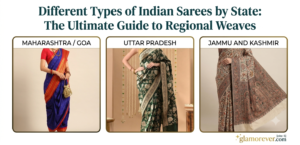
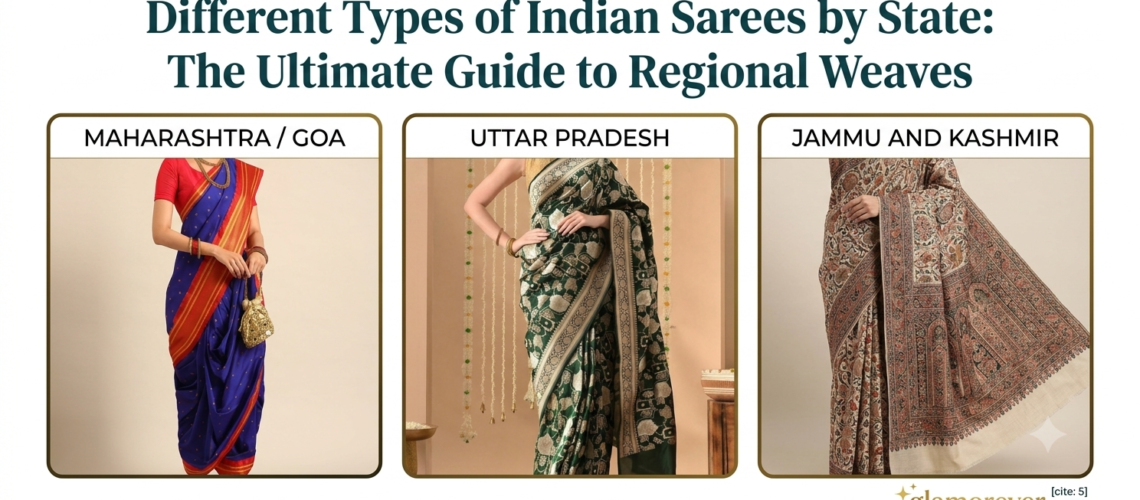
Different Types of Indian Sarees by State: The Ultimate Guide to Regional Weaves

A state-by-state journey through India’s 20+ living handloom traditions β€” their stories, fabrics, GI tags, and how to wear them today. πŸ₯»βœ¨

India does not have one saree. It has hundreds β€” each one a different dialect of the same ancient language.

Think about this for a moment: every single state in India β€” and often every district within a state β€” has its own weaving tradition, its own signature motifs, its own local dye palette, and its own way of interlacing silk or cotton threads into something that women have worn for thousands of years. A Kanjeevaram saree from Kanchipuram and a Chanderi from Madhya Pradesh are both “Indian sarees,” but they are as different from each other as biryani from Hyderabad is from biryani in Lucknow. Same name, entirely different soul.

What’s genuinely exciting in 2026 is that younger Indian women are increasingly curious about these regional traditions β€” not just buying whatever is trending on Instagram, but actually asking: where does this saree come from? Who wove it? What does the motif mean? That curiosity is what this guide is here to feed. We’ve mapped out India’s most iconic regional weaves state by state, covering what makes each one distinct, how to identify the real thing, what occasions it suits best, and where to find it today.

Whether you’re a saree enthusiast building a considered wardrobe, or simply someone who wants to understand the magnificent textile heritage behind every six yards β€” this is your complete guide. Let’s begin our journey. πŸ—ΊοΈ

πŸ“Œ At a Glance: Why India’s Regional Sarees Matter

  • πŸ›οΈIndia hasΒ over 28 distinct handloom saree traditionsΒ β€” many protected by Geographical Indication (GI) tags.
  • πŸ‘©β€πŸŽ¨The handloom sector supportsΒ 35+ lakh weaversΒ across rural India, making it the second-largest rural employer after agriculture.
  • πŸ“ˆThe global handloom saree market is projected to reachΒ $7.29 billion by 2032Β β€” driven by growing appreciation for craft and heritage textiles.
  • 🌱Handloom sarees are inherently sustainable β€” natural fibres, traditional dyes, zero machine involvement in the weaving process.
  • βœ…GI-tagged sarees carry a verified mark of authenticity β€” always look for the GI tag when buying premium handloom.

Region 01 β€” North India

North India’s Saree Traditions

πŸ›οΈ Uttar Pradesh

Banarasi Saree

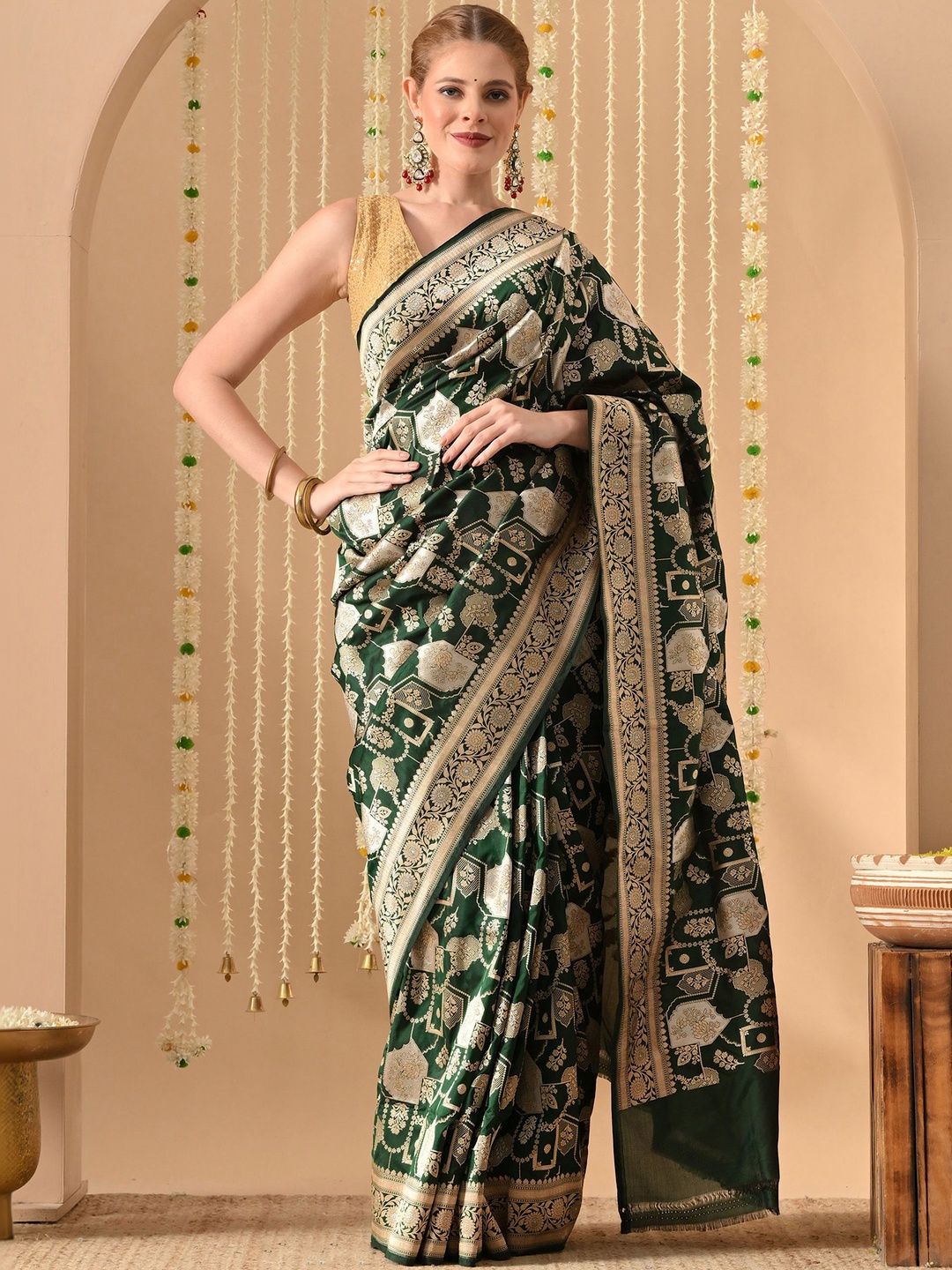
The undisputed queen of North Indian weaving, the Banarasi saree comes from the ancient city of Varanasi (Banaras) along the banks of the Ganga. What sets it apart is the use of real zari β€” gold or silver metallic thread woven directly into the fabric β€” creating brocade patterns inspired by Mughal architecture: floral jaal motifs, kadwa butis, and richly adorned pallus that can take a master weaver several weeks to complete. Pure Silk Banarasi, Organza Banarasi, and the lighter Tissue Banarasi are the three main variants you’ll encounter today.
WeddingsHeirloomReceptions

πŸ”οΈ Uttar Pradesh

Lucknawi Chikankari Saree

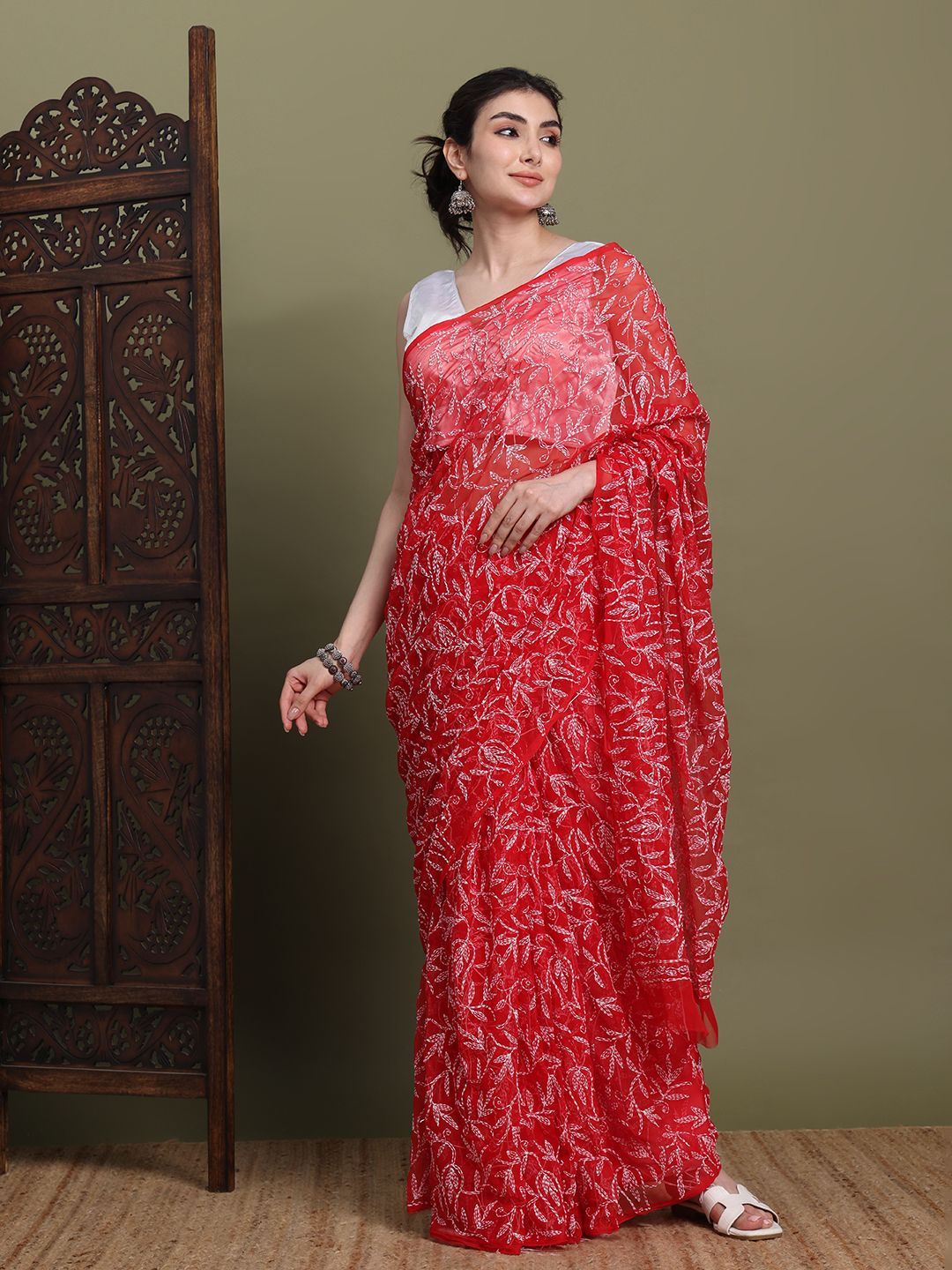
Chikankari is Lucknow’s most celebrated craft β€” a delicate hand-embroidery tradition in which artisans stitch intricate floral patterns onto fabric using white thread, creating a shadow-work effect of extraordinary subtlety. While the craft is most famous on cotton, chikankari on georgette and organza sarees has made it a major festive and formal wear choice. What makes it special is the process: every piece is embroidered by hand, meaning no two chikankari sarees are ever exactly alike.

Formal EventsFestiveSummer

🏯 Rajasthan

Bandhani Saree

Bandhani is the oldest known resist-dyeing technique in India, practised in Jaipur and Jodhpur for over 5,000 years. Tiny sections of fabric are tied tightly with thread before dyeing, creating characteristic circular dots in patterns that can range from simple grids to elaborate pictorial compositions. The finished fabric is a burst of colour β€” typically red, yellow, green and pink β€” that perfectly captures Rajasthan’s joyful visual culture. Bandhani sarees are especially beloved for weddings and festivals.

WeddingsTeejNavratri

🌸 Punjab / Himachal

Phulkari Saree

Phulkari β€” literally meaning “flower work” β€” is Punjab’s most beloved embroidery tradition. Originally done on a coarse cotton ground fabric, modern phulkari sarees use silky base cloths embroidered with vivid geometric and floral motifs in vibrant silk threads. The embroidery covers so much of the surface that the base fabric is often barely visible, creating a richly textured, jewel-like effect. Phulkari sarees and dupattas are a staple of Punjabi weddings, especially for the mehendi and sangeet.

WeddingsBaisakhiSangeet
πŸ”΄

Region 02 β€” South India

South India’s Saree Traditions

πŸ›• Tamil Nadu

Kanjeevaram (Kanchipuram) Saree

The Kanjeevaram is arguably India’s most prestigious handloom saree, woven in the temple town of Kanchipuram using pure mulberry silk and real zari. The defining feature is the korvai technique β€” in which the body and the border are woven separately, then interlocked at the selvedge β€” creating a distinct structural contrast between the main fabric and the bold, often contrasting border. Temple motifs: peacocks, elephants, and gopuram shapes are woven directly into the fabric. An authentic Kanjeevaram is a significant financial and emotional investment, and is traditionally passed down through generations.

WeddingsPongalHeirloom

🌴 Kerala

Kasavu (Kerala Saree)

The Kasavu saree is elegance in its most restrained form: a cream or off-white cotton body with a single band of gold zari at the border. Worn traditionally with the gold side facing out, the Kerala saree carries deep cultural significance β€” it is the dress of Onam, of Vishu, of a Keralite girl’s first day in school. In recent years, it has quietly crossed over into mainstream fashion as everyday chic, pairing beautifully with bold contemporary blouses and minimal gold jewellery.

OnamDaily WearMinimalist Style

🦚 Andhra Pradesh / Telangana

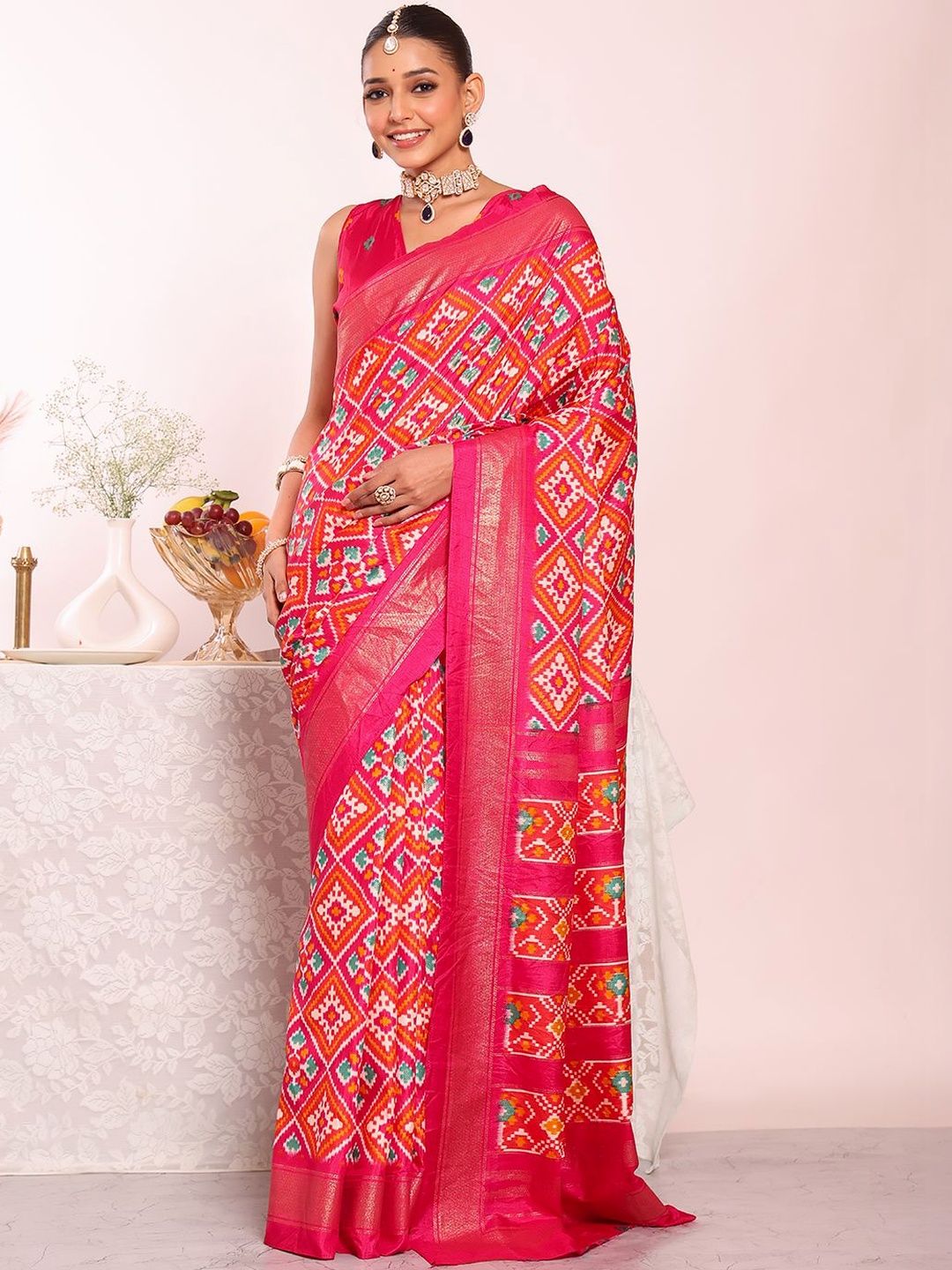
Pochampally Ikkat Saree

Named after the village of Pochampally in Telangana, this saree uses the double ikat technique β€” a remarkably complex process in which both the warp and the weft threads are resist-dyed before weaving, creating those characteristic blurred-edge geometric patterns that seem to shimmer and shift as the fabric moves. The result is a saree with a deeply distinctive visual texture that cannot be replicated by machine β€” every pattern line carries the imprecision that is the handloom’s signature beauty. The geometric diamond and chevron patterns are the most iconic.

FestivalsOfficeCasual

🌸 Karnataka

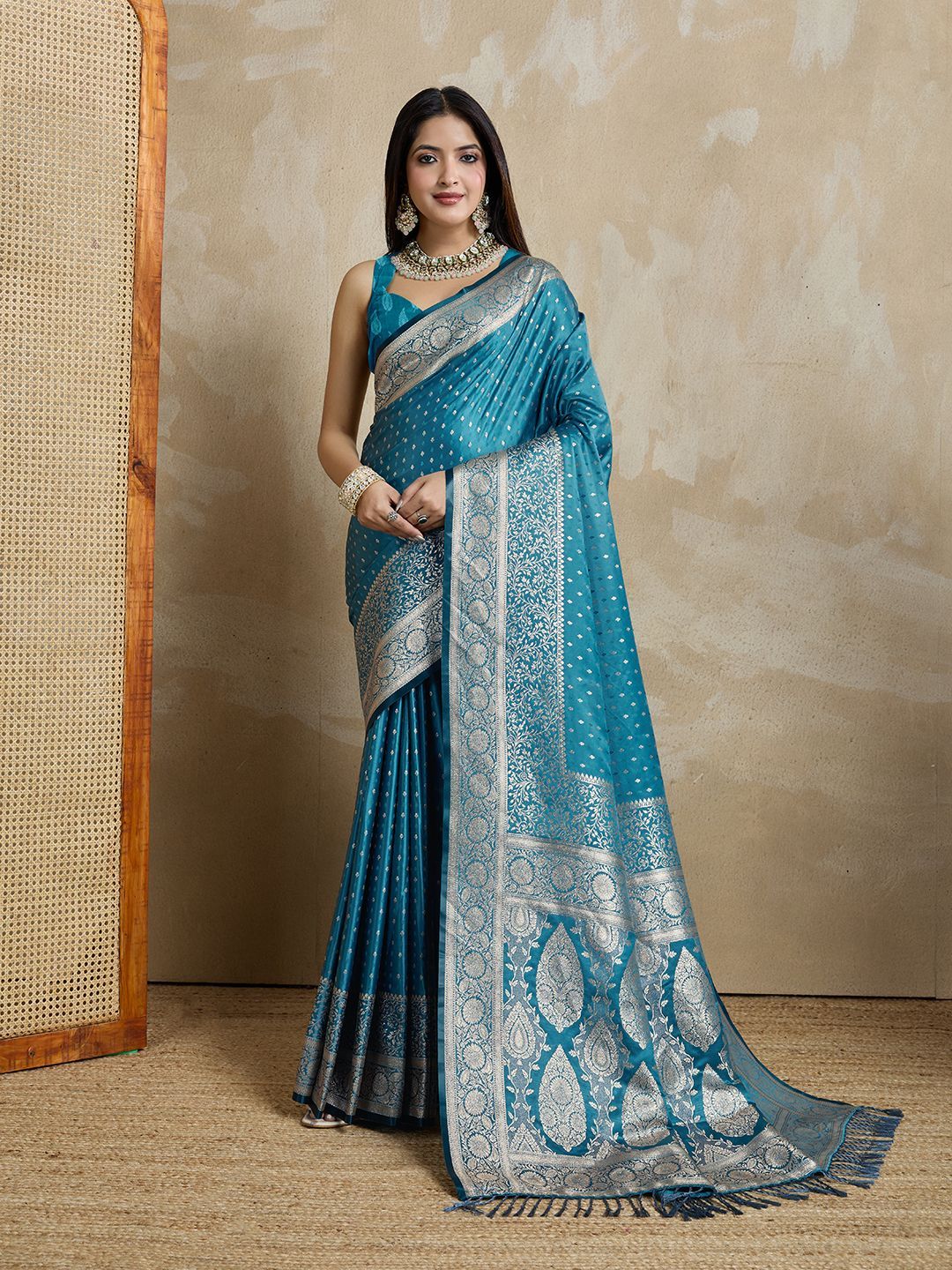
Mysore Silk Saree

Mysore silk is among India’s softest and most lustrous silk weaves β€” lighter than Kanjeevaram, with a fluid drape that feels almost like water against the skin. The Karnataka state government controls its production tightly through the Karnataka Silk Industries Corporation, and each authentic piece carries a government stamp. Mysore silk sarees are known for their solid colour bodies in deep, jewel-like shades β€” ruby, peacock blue, deep magenta β€” paired with pure gold zari borders and pallus.
DasaraWeddingsFormal Events

πŸ’‘Β Authenticating a South Indian silk saree:Β Always check for the Silk Mark label (a government certification for pure silk) and the GI tag on the border of the saree. For Kanjeevaram specifically, run the burn test β€” real silk burns like hair, leaving behind powdery ash, while synthetic fibres melt into a hard bead.

πŸ”΅Β  Region 03 β€” East India

East India’s Saree Traditions

🎨 West Bengal

Tant Saree

The Tant is Bengal’s everyday saree and also its most beloved β€” a lightweight handloom cotton woven in districts like Shantipur and Fulia, known for its characteristic texture (slightly rough against the fingertips but breezy and breathable to wear) and its clean, wide borders in contrast thread. The patterns are simple: geometric grids, stripes, fine checks. A true Tant becomes softer and more beautiful with every wash, which is why many women in Bengal own Tants that are decades old and more treasured for it.

Daily WearDurga PujaOffice

✍️ West Bengal

Baluchari Saree

The Baluchari is one of India’s most extraordinarily detailed handloom sarees, originating from Bishnupur in West Bengal. What makes it unparalleled is its narrative pallu β€” the end-piece of the saree is woven with pictorial scenes from Hindu epics like the Mahabharata and Ramayana, rendered entirely in thread using the jamdani technique. Some pallus contain dozens of individual figures in miniature. Baluchari sarees are woven on traditional throw-shuttle looms and represent a level of craft skill that takes years to develop.

WeddingsCultural EventsHeirloom

🌊 Odisha

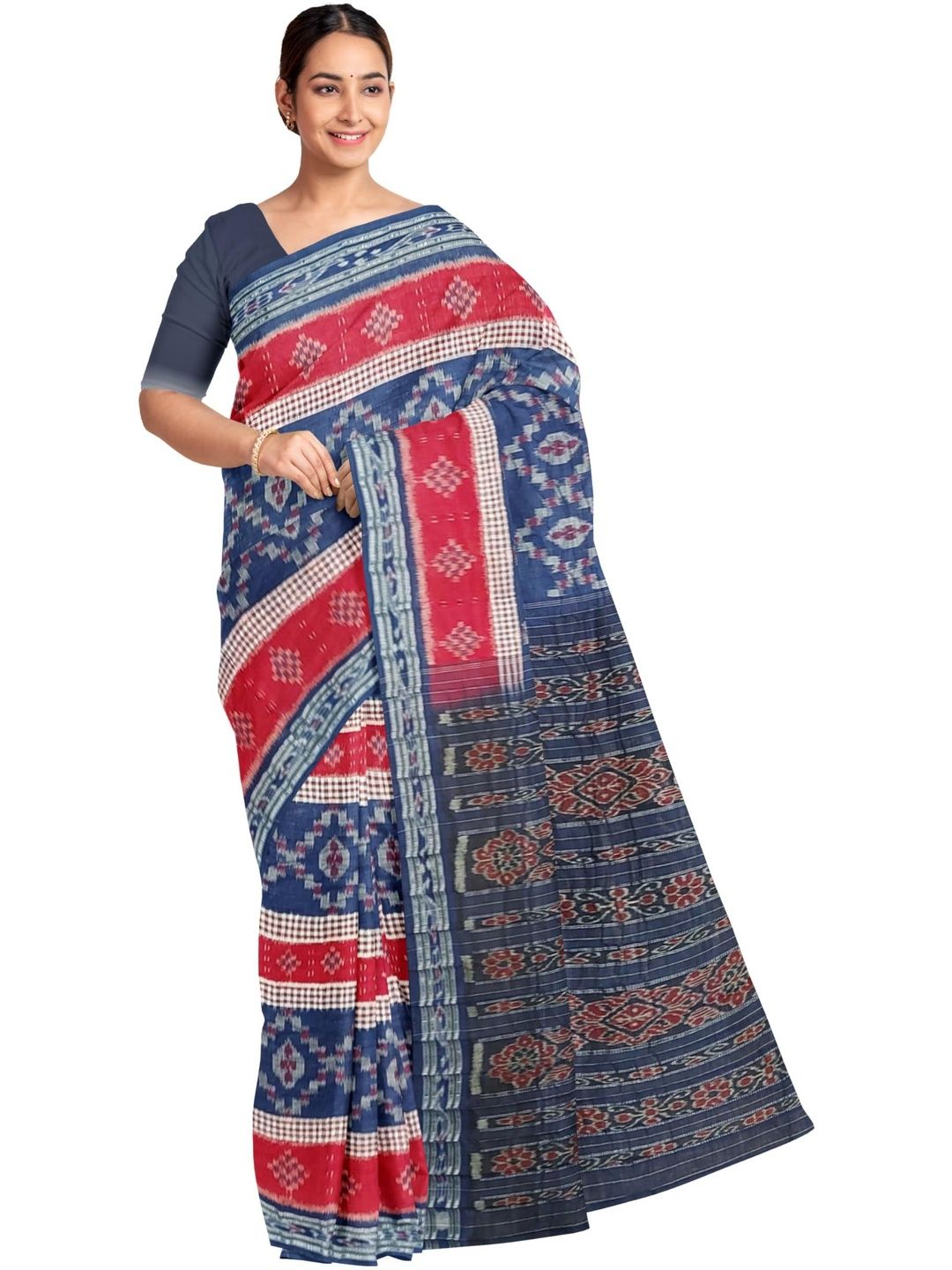
Sambalpuri Saree

Woven in the Sambalpur region of Odisha using single ikat β€” where only the warp threads are pre-dyed before weaving β€” the Sambalpuri saree is distinguished by its bold, symmetric motifs: the shankha (conch shell), chakra (wheel), phula (flower), and lehr (wave). The ikat technique creates a beautiful blurred edge to each motif. Sambalpuri is woven in both cotton and silk, with the silk version (Bomkai) being especially prized for its richly worked borders and pallus in contrasting colours.

FestivalsCasualOffice

✨ Assam

Muga Silk Saree

Muga silk is Assam’s greatest textile gift to the world β€” and also one of the rarest. Produced exclusively in Assam from the silkworms of the Antheraea assamensis moth, Muga silk has a naturally golden lustre that intensifies with every wash and actually becomes richer with age. It is the only natural fibre in the world that produces a golden-coloured silk thread without any dyeing. Muga sarees are among the most durable silks in the world β€” documented examples have lasted over 500 years.

BihuWeddingsHeirloom

πŸ›οΈ Looking to Shop Authentic Regional Sarees Online?

We review and compare the best handloom sarees across Myntra, Nykaa Fashion, Craftsvilla, Amazon India, and government e-marketplace sites. Check our curated Handloom Shop Edit on GlamorEver β€” updated monthly with verified authentic picks across every state.

🟠 Region 04 β€” West India

West India’s Saree Traditions

πŸ¦‹ Gujarat

Patola Saree

The Patola is arguably India’s most technically complex handloom saree β€” a double ikat woven in Patan, Gujarat, by a handful of families who have closely guarded the technique for centuries. Unlike single ikat, double ikat requires both the warp and weft threads to be individually resist-dyed in precise patterns before weaving β€” so that when the threads interlace, the patterns align perfectly to form crisp, jewel-like geometric compositions. An authentic Patan Patola can take six months to weave and costs lakhs β€” and every single one is reversible: it looks equally perfect on both sides.

WeddingsNavratriInvestment Piece

🌺 Maharashtra

Paithani Saree

Named after the town of Paithan in Aurangabad district, the Paithani is Maharashtra’s most prized textile heritage β€” a silk saree woven with pure gold or silver zari, distinguished by its distinctive peacock motif on the pallu and its oblique square or hexagonal patterns (bangdi mor) on the border. The Paithani’s defining characteristic is its interlocked weave structure: the border and body are woven simultaneously using separate shuttle systems, creating a seamless colour join at the selvedge. Every single Paithani is a one-of-a-kind piece.

WeddingsGudi PadwaHeirloom

🏜️ Rajasthan

Kota Doria Saree

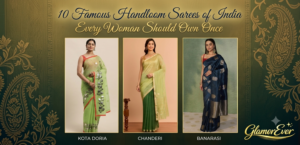
Kota Doria is Rajasthan’s most practical textile treasure β€” a lightweight cotton-silk blend woven in Kaithoon village near Kota, characterised by its distinctive square check pattern (khat) created by bunching warp and weft threads at intervals. The result is a sheer, airy fabric that drapes beautifully and feels impossibly light in the scorching Rajasthani heat. Kota Doria sarees in natural block prints, zari borders, and even embroidered variants have made this humble weave a national favourite for summer wear.
Summer WearCasualOffice

🎭 Maharashtra / Goa

Nauvari Saree

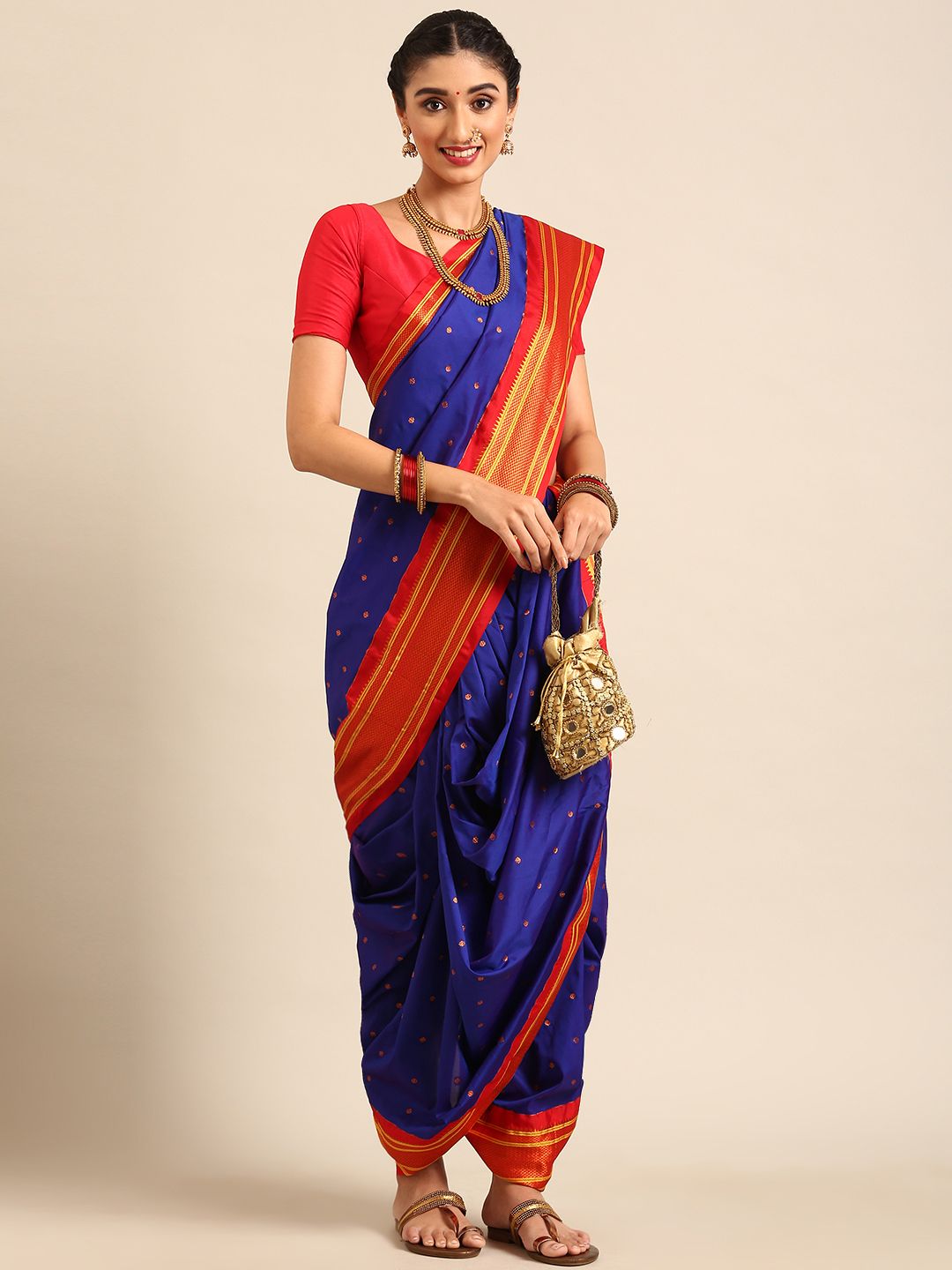
The Nauvari is Maharashtra’s traditional nine-yard saree β€” yes, nine yards, not six β€” draped in a distinctive dhoti-like style that cinches the fabric between the legs, giving a trouser-like silhouette that allows complete freedom of movement. Historically worn by Marathi women for work in the fields and for religious ceremonies, the Nauvari today is a powerful cultural fashion statement, increasingly styled by younger Maharashtrian women at festivals, weddings, and cultural events as a proud assertion of regional identity.

Gudi PadwaCultural EventsLavani

🟒 Region 05 β€” Central India

Central India’s Saree Traditions

πŸƒ Madhya Pradesh

Chanderi Saree

Woven in the historic town of Chanderi in Madhya Pradesh, the Chanderi saree is made from a silk-cotton blend that produces its hallmark combination of sheer drape and subtle shimmer. The fabric is so finely woven that a full six-yard saree can be passed through a finger ring β€” a claim weavers still demonstrate proudly. Traditional Chanderi motifs include coin patterns, florals, and peacocks woven in fine silk threads. In 2026, Chanderi is having its biggest fashion moment yet, appearing in block prints, natural dyes, and minimalist two-tone weaves.

FestivalsGiftingFormal Wear

🌿 Madhya Pradesh

Maheshwari Saree

The Maheshwari saree comes from the town of Maheshwar on the banks of the Narmada β€” revived in the 18th century by the queen Ahilyabai Holkar, who invited weavers from across the country to establish a weaving tradition here. The saree is woven in silk and cotton combinations, characterised by its distinctive five-stripe border (alternating colours), reversible border pattern, and either solid-colour or small checks on the body. The Maheshwari drapes more crisply than Chanderi, making it a favourite for professional settings.

Office WearSemi-FormalCasual

πŸͺ’ Chhattisgarh

Kosa Silk Saree

Kosa silk β€” often called Tussar silk β€” is Chhattisgarh’s most important handloom offering, produced from the tasar silkworm (Antheraea mylitta) in the forested regions of Champa, Raigarh, and Bilaspur. The silk has a characteristically raw, earthy texture and a warm golden-bronze natural colour that takes dyes beautifully. Kosa sarees are often finished with tribal-inspired motifs in contrasting thread, and their slightly coarser hand-feel gives them a distinct, organic quality that distinguishes them from cultivated silk weaves.

CasualFestivalsEco-Conscious

🌾 Madhya Pradesh

Bagru Block Print Saree

While not a weave in the technical sense, Bagru block printing from Rajasthan and MP deserves its place in any regional saree guide. Artisans in Bagru use hand-carved wooden blocks to stamp natural dye patterns β€” predominantly madder red, indigo blue, and black β€” onto cotton and mul fabric. Each print block is a piece of art in itself, carved by craftsmen who have been doing this for generations. Bagru block print sarees have a warmth and imperfection that no digital print can replicate.

CasualEveryday WearGifting

Pro Tip:Β If you’re buying a green saree for the first time, start with aΒ bottle green georgetteΒ saree. It’s versatile, easy to drape, flattering on all body types, and works for both festive and semi-formal occasions. You truly can’t go wrong!

Regional Sarees at a Glance: Quick Comparison Guide πŸ“Š

Finding it hard to keep all these weaves straight? Here’s a quick reference table to help you compare them across the most important parameters β€” fabric, price range, and best occasion β€” before you decide which regional saree to add to your wardrobe next.

Saree State Fabric Price Range (β‚Ή) Best For
Banarasi UP Pure Silk / Organza 5,000 – 2,00,000+ Weddings, Heirloom
Kanjeevaram Tamil Nadu Mulberry Silk 8,000 – 5,00,000+ Weddings, South Indian Festivals
Chanderi MP Silk-Cotton Blend 1,200 – 15,000 Festivals, Gifting, Work
Maheshwari MP Silk-Cotton Blend 1,500 – 12,000 Office, Semi-Formal
Pochampally Ikkat Telangana Silk / Cotton 2,000 – 25,000 Casual, Festive
Tant West Bengal Pure Cotton 500 – 5,000 Daily Wear, Durga Puja
Patola Gujarat Pure Silk 50,000 – 5,00,000+ Weddings, Investment
Paithani Maharashtra Pure Silk + Zari 10,000 – 3,00,000+ Weddings, Heirloom
Kota Doria Rajasthan Cotton-Silk 1,000 – 8,000 Summer, Office, Casual
Muga Silk Assam Muga Silk 8,000 – 1,00,000+ Bihu, Weddings
Kasavu Kerala Cotton 1,500 – 15,000 Onam, Daily Wear
Sambalpuri Odisha Cotton / Silk 2,500 – 30,000 Festivals, Office

“A premium designer saree is not an expense β€” it is a heirloom in the making. Every thread carries the fingerprints of an artisan, every fold carries a story.” ✨

How to Buy Authentic Indian Handloom Sarees: 3 Things That Matter πŸ›‘οΈ

Now that you know what to look for in each regional saree, let’s talk about how to actually buy one without getting cheated β€” because unfortunately, the handloom market is rife with machine-made imitations sold at handloom prices.

01

Look for the GI Tag

A Geographical Indication tag is government-certified proof that the saree is genuinely from the region it claims. Always insist on seeing the GI label when buying premium handloom β€” particularly for Kanjeevaram, Banarasi, Patola, and Paithani.

02

Handloom Mark Certification

The Indian government’s Handloom Mark β€” a blue-and-white woven label β€” certifies that a product is genuinely handwoven. If a saree is sold as “handloom” without this mark, ask the seller to explain why β€” reputable weavers and cooperatives always use it.

03

Buy from Verified Sources

State government emporiums (Delhi Haat, Tantuja in Bengal, APCO in Andhra Pradesh) and platforms like India Handloom, GoCoop, and Craftsvilla have verified authenticity processes. Individual cooperative websites are also more trustworthy than generic marketplaces.

πŸ”Β Quick authenticity tip:Β Genuine handloom sarees almost always have slight irregularities β€” small variations in thread spacing, barely perceptible differences in colour density. These imperfections are the weaver’s fingerprint. If a “handloom” saree looks machine-perfect, it almost certainly is machine-made.

How to Care for Your Regional Handloom Sarees 🧺

Regional handloom sarees are investments β€” some of them significant ones. The good news is that with the right care, they last decades and only improve with time. Here’s what to keep in mind.

🧴Silk sarees (Banarasi, Kanjeevaram, Paithani, Muga):Β Always dry clean. If you must wash at home, use a very gentle cold-water rinse with mild soap β€” never machine wash, and never wring. Roll in a towel to remove water, then dry in shade.

🌊Cotton handlooms (Tant, Kasavu, Kota Doria): Hand wash in cold water. Most cotton handlooms are colour-fast after the first wash, but always wash dark and light colours separately for the first two to three washes.

πŸ‘šStorage:Β Wrap each saree individually in clean white muslin fabric β€” never plastic, which traps moisture. Keep a few neem leaves in the storage to deter insects naturally. Refold sarees along different crease lines every few months to prevent permanent crease marks.

♨️Ironing:Β For zari sarees, always iron on the reverse side with a cloth between the iron and the fabric. Never iron zari directly β€” the metallic thread can tarnish or break. Organza and georgette sarees should be steamed rather than ironed.

🌿Airing: Air your handloom sarees in shade (not direct sunlight) at least twice a year to prevent moisture build-up and the musty smell that develops in storage.

Frequently Asked Questions (FAQs) ❓

Q1: Which state in India is most famous for sarees?

Varanasi (Uttar Pradesh) for Banarasi silk, Kanchipuram (Tamil Nadu) for Kanjeevaram, and Patan (Gujarat) for Patola are considered the three most famous saree-weaving centres in India. However, virtually every state has its own significant handloom tradition.

Q2: What is the difference between Kanjeevaram and Banarasi sarees?

Kanjeevaram uses heavy mulberry silk with bold temple-inspired motifs and a korvai-woven border in Tamil Nadu. Banarasi uses lighter silk with Mughal-inspired floral brocade patterns in Varanasi. Both use real zari, but the weaving technique, motif style, and drape are completely different.

Q3: How do I know if a handloom saree is genuine?

Look for the GI tag (state-specific), the Handloom Mark certification, and β€” in the case of silk β€” the Silk Mark label. Buy from government emporiums, certified cooperatives, or platforms with verified handloom sourcing. Minor imperfections in thread and pattern are a sign of genuine handwork, not poor quality.

Q4: What is the most affordable type of handloom saree?

Tant (Bengal cotton), Kota Doria (Rajasthan), Chanderi cotton, and Bagru block print sarees offer excellent handloom quality at genuinely accessible price points β€” typically between β‚Ή800 and β‚Ή5,000 for good pieces. They’re also among the most comfortable for everyday wear.

Q5: Which saree is best for a South Indian wedding?

A Kanjeevaram or Mysore silk saree in a rich jewel tone is the traditional and most widely celebrated choice for South Indian weddings. For a Kerala wedding, a Kasavu (set saree) is the culturally appropriate and most elegant choice.

Q6: Is it okay to wear a regional saree from another state?

Absolutely β€” in fact, wearing a Sambalpuri from Odisha or a Tant from Bengal when you’re from Punjab or Maharashtra is a beautiful act of cultural appreciation. The handloom market depends on buyers from all over India, and choosing a regional weave consciously supports the artisan families who make it.

Q7: What is the rarest Indian handloom saree?

The Patan Patola (Gujarat) is considered the rarest and most labour-intensive β€” woven by only a handful of remaining families using a closely guarded double-ikat technique. A single authentic Patan Patola can take four to six months to complete, and prices start from β‚Ή50,000 and go into the lakhs.

India’s regional saree traditions are not museum pieces. They are living, breathing, daily-worn testaments to the craft intelligence of communities that have been weaving for centuries. Every time you choose a Chanderi over a synthetic imitation, a Tant over a machine-made copy, or a Pochampally over a digital-printed knock-off, you are participating in something genuinely meaningful β€” you are keeping an artisan’s livelihood intact and ensuring that a thousand-year-old technique is passed on to the next generation of weavers.

There is no single “best” Indian saree. There is only the one that tells the right story for you, in the right moment, with the right six yards of someone’s life woven into its threads.

Explore India one saree at a time. πŸ—ΊοΈπŸ₯»βœ¨

Leave a Reply

Your email address will not be published. Required fields are marked *

×