September 29, 2026
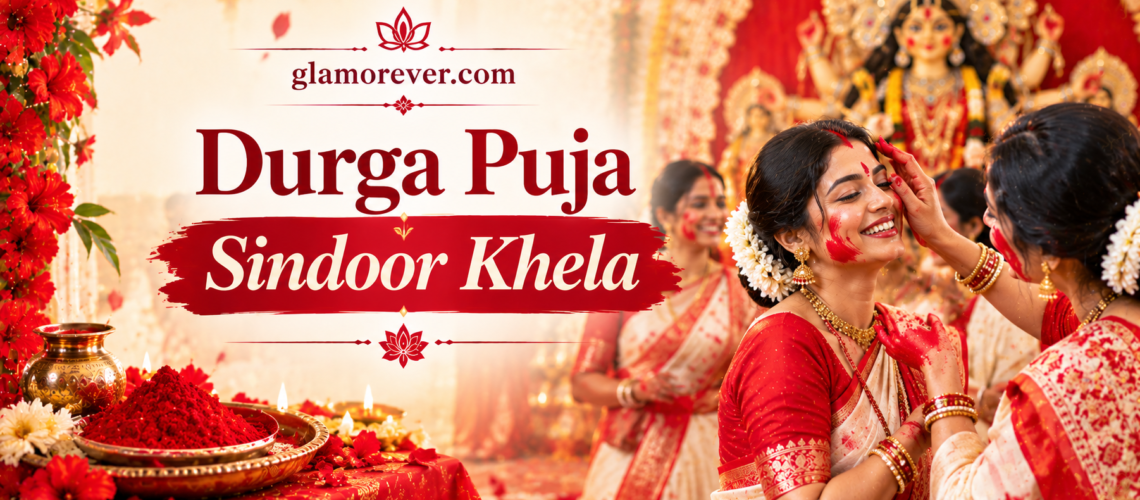
Sindoor Khela: Meaning, Rituals &
Significance of This Durga Puja Tradition
The most emotionally powerful moment of Vijaya Dashami — where vermillion meets farewell, joy meets grief, and thousands of women celebrate the Goddess together. 🌸✨
There is a moment during Vijaya Dashami, usually mid-morning, when a particular kind of sound fills the air around every Durga Puja pandal — the long, collective ululation of women, the mournful call of the conch shell, the sharp crack of sindoor boxes opening — and if you know what is happening, it can stop you completely in your tracks.
That moment is Sindoor Khela — literally “playing with sindoor” — and it is, without question, one of the most emotionally layered, culturally rich, and visually extraordinary traditions in all of India’s festival calendar. It is simultaneously a farewell and a celebration, a ritual and a release, a deeply personal act of devotion and a collective, communal expression of womanhood that has been passed down through generations of Bengali families without interruption. Whether you have grown up with it, are experiencing it for the first time, or are encountering it through a friend’s social media, understanding Sindoor Khela properly enriches everything you see and feel about it.
In this guide, we have covered everything about Sindoor Khela — its meaning and etymology, its deep cultural and spiritual significance, the precise rituals observed step by step, who participates and how, the emotional dimensions of Vijaya Dashami that give the tradition its power, what to wear, what to carry, and how the tradition has evolved in the modern era. Furthermore, we have addressed some of the most important conversations happening around Sindoor Khela today — about inclusion, about who the tradition belongs to, and about why it continues to draw more participants, not fewer, with every passing year. Let us begin. 🌸✨
📌 Sindoor Khela — At a Glance
- 🌸What it is: A ritual where married Bengali women apply sindoor (vermillion) to the Goddess Durga’s idol and to each other, on the final day of Durga Puja (Vijaya Dashami).
- 📅When it happens: Vijaya Dashami morning — the tenth day of Durga Puja, before the Bisarjan (immersion) of the Goddess’s idol.
- 🤝Who participates: Traditionally married Hindu women, though the tradition has evolved to include unmarried women, widows, women of all backgrounds, and in some spaces, people of all identities.
- 🌸The significance: Celebrates the Goddess’s departure back to Mount Kailash with her husband Shiva — women offer her the most auspicious thing a married woman possesses (her sindoor) and wish her well on her journey.
- 💕The emotion: Bittersweet and intensely moving — five days of celebration end here, and the farewell is real and felt deeply by the entire community.
🌸 What Does Sindoor Khela Mean? The Etymology and Story
The phrase Sindoor Khela is pure, simple Bengali: sindoor is vermillion — the red powder that Indian married women apply in the parting of their hair as a sign of their married status — and khela is play, game, or celebration. Together, the phrase means “playing with sindoor,” which, while it sounds casual, describes something that is actually one of the most ritually significant and emotionally charged acts in the Bengali festival calendar.
🌸 The Story Behind the Ritual
To understand Sindoor Khela, you first need to understand who Durga is in the Bengali imagination — and it is quite different from the fierce, ten-armed Goddess of destruction that one might assume from her iconography. In Bengal, Durga is Parvati, the daughter who has come home to her parents for the duration of Durga Puja. She arrives with her children — Lakshmi, Saraswati, Ganesh, and Kartik — and spends five glorious days at her parents’ home (represented by the entire community’s pandal). On Vijaya Dashami, her husband Shiva calls her back to Mount Kailash, and she must return.
Sindoor Khela is the farewell. The married women of the community, who have spent five days celebrating alongside their beloved Maa, first offer sindoor to the Goddess — the most precious thing a married woman in Indian tradition possesses, the symbol of her own auspiciousness and married life. Then they smear sindoor on each other — on faces, foreheads, necks, everywhere — in a collective expression of joy, grief, solidarity, and love that is unlike anything else in Indian cultural life. It is a farewell dressed in red.
 Click for Best Selling Kurti Sharara Sets Online in India
10 Famous Handloom Sarees of India
Best Women’s Festive Kurti Sets & Traditional Outfits Under ₹1000
Latest Saree Trends 2026
Best Party Wear Designer Sarees for Women
Furthermore, the timing of Sindoor Khela within Vijaya Dashami is specific and layered. It occurs after the final Puja of the morning, before the Bisarjan (immersion) procession begins — so it is a farewell that precedes a farewell, an intimate ceremony of women that happens just before the entire community comes out to accompany the Goddess to the water. In this sense, Sindoor Khela is the women’s private goodbye before the public one.
✨ The Deep Cultural Significance of Sindoor Khela
Every tradition carries layers of meaning that build across centuries, and Sindoor Khela is no exception. Let us unpack the significance of this ritual from several angles — spiritual, social, and deeply personal.
💕 Sindoor as the Most Sacred Offering
In the Hindu tradition, sindoor is not merely a cosmetic — it is a symbol of saubhagya (the state of being blessed with a living husband), of a woman’s auspiciousness, and of her protection by the Goddess herself. For a married Hindu woman, the sindoor in her parting is among the most personally significant marks she wears. Consequently, when the women of a Bengali household offer their sindoor to Durga before she departs, they are offering the most precious element of their own auspicious identity to the Goddess — it is a gift that could only be given by a married woman, and one that carries enormous emotional and spiritual weight.
🌸 A Celebration of Womanhood and Solidarity
Equally significant is the social dimension of Sindoor Khela. This is, at its most essential, a woman’s ritual — one of the very few spaces in traditional Hindu festival culture that belongs entirely to women, observed by women, for women. When married women smear sindoor on each other’s faces and foreheads, they are doing something that goes beyond religious ritual: they are celebrating each other, affirming each other’s identity, and claiming a joyful, physical, playful freedom that is often absent from the more solemn dimensions of religious life. The laughter, the tears, the embrace, the shared vermillion — all of it happens in a woman’s space, on women’s terms.
🎬 The Bittersweet Emotional Register
Perhaps the most culturally specific and difficult to translate dimension of Sindoor Khela is its emotional register — what Bengalis call bhalobasha and birah together, love and the pain of separation simultaneously. The crying and the laughing happen at the same time. Women who have celebrated together for five days must say goodbye to the Goddess and to each other’s company in that particular, heightened way that only festival time creates. The emotion is not performed — it is completely genuine, and it gives Sindoor Khela its extraordinary power to move even people who witness it for the first time.
The Joy 🌸
Five days of the most joyful celebration in the Bengali calendar. The community gathered, the pandal visited, the puja observed, the food shared. Sindoor Khela is the culmination of all that joy — a final, explosive expression of happiness and love poured onto each other and onto the Goddess before she leaves.
The Grief 💕
Maa is leaving. The daughter is going back to her husband’s house. The idol that has been the living centre of the community for five days will shortly be submerged in water. The grief is real, the tears are genuine, and the sound of the dhak and the conch shell in this moment can break the heart of anyone who loves Durga Puja.
She came as our daughter, she spent five days in our home, and now she must go back. We send her with our sindoor, our love, and the only prayer a woman can make on this day — come back soon, Maa. Come back next year.
🌸 The spirit of Sindoor Khela — as it has been observed for generations
🤝 The Sindoor Khela Rituals: Step by Step
The rituals of Sindoor Khela follow a sequence that varies slightly by family tradition and by the organisation conducting the puja — but the essential arc is consistent across Bengal and the Bengali diaspora. Here is a complete guide to what happens, and when.
Dhuno Deooa — The Sacred Smoke Offering
Before the sindoor ritual begins, women perform Dhuno Deooa — the ritual waving of burning coconut husks (dhuno) in clay pots. The fragrant white smoke is offered to Maa Durga as a farewell gesture of devotion, and the women hold their saree pallu to catch the smoke as a blessing. The ululation (hoogly) — that distinctive, high, trembling sound Bengali women make at auspicious moments — fills the air simultaneously. This is often the first moment of the day that brings tears, even before the sindoor comes out.
Offering Sindoor to Maa Durga — The Sacred First Act
The married women approach the Goddess’s idol and first apply sindoor to her — to the part in her hair, to her forehead, to the red border of her saree in some traditions. This act of offering the sindoor to Durga before applying it to each other is the ritual’s most spiritually significant moment: the women are sharing their most precious possession with the Goddess, wishing her a safe and blessed return to her husband’s home, and asking for her continued blessings on their own married lives. In many large pandal celebrations, this offering happens in waves, with women approaching the idol in groups.
The Sweet Pan — Pan Mukhe Deooa
A significant ritual element that often follows the first sindoor offering is the offering and sharing of sweet betel leaf (mishti pan). Women offer pan to the Goddess and then feed it to each other. The sweet pan symbolises the sweetness of life and love, and the communal act of feeding each other — across age groups, across social positions within the community — is a beautiful expression of equality and love. The bite of the sweet, fragrant pan punctuates the emotion of the morning with something gentle and pleasurable.
Shubho Bijoya — The Community Greeting
Interleaved with the sindoor ritual is the exchange of Shubho Bijoya greetings — the formal Vijaya Dashami greeting where people touch the feet of elders, embrace equals, and exchange sweets. This greeting continues for days after Vijaya Dashami, but the morning’s exchange at the pandal, with sindoor-covered faces and the smell of dhuno in the air, is its most emotionally charged form. Family members who haven’t met through the Puja days reunite here; feuds are traditionally resolved; love is renewed.
Khela — The Joyful Sindoor Play
Then comes the khela — the “play” that names the entire tradition. Women smear sindoor on each other — on faces, foreheads, necks, hair, cheeks, and everywhere in between — with laughter, with tears, with shouts of joy and ululation. It is physical and joyful and chaotic and completely genuine. The white sarees turn red. The faces turn red. The air smells of vermillion, agarbatti, and the marigolds that have decorated the pandal for five days. This is the image of Sindoor Khela that is photographed endlessly, and rightfully — it is one of the most beautiful things you will ever see.
The Conch Shell & Ululation — Shankha & Huluhuli
Throughout the Sindoor Khela, conch shells are blown (shankha deooa) and women perform the ululation (huluhuli or hooloo deooa) — those high, trembling cries that mark every auspicious moment in Bengali culture. The conch’s sound is particularly significant: it is both an auspicious sound and a farewell signal, announcing simultaneously that this is a blessed moment and that it is ending. The combination of the shankha’s call, the women’s ululation, and the dhak drum in the background creates a soundscape that is unforgettable.
Bisarjan — The Farewell Procession
After the Sindoor Khela is complete, the entire community comes together for Bisarjan — the procession that carries Maa Durga’s idol to the river or water body for immersion. The women who were just laughing and crying together in the sindoor celebration now walk together in the farewell procession, often still with sindoor on their faces. The emotion of Bisarjan, coming directly after Sindoor Khela, is the most overwhelming moment of the entire Durga Puja calendar. And as the idol disappears beneath the water, the words on every Bengali’s lips are the same: “Aashche bochor abar hobe” — “Next year, this will happen again.”
💎 The Symbols of Sindoor Khela: What Everything Means
Every element of Sindoor Khela carries symbolic weight that deepens the meaning of the ritual for those who understand it. Here are the key symbols and what they represent.
🌸
Sindoor (Vermillion)
The symbol of a married woman’s saubhagya (auspiciousness) and her protection by the Goddess. Offering it to Durga is the highest gift a married woman can give.
🦔
Shankha (Conch Bangles)
The white conch-shell bangles worn by married Bengali women — paired with the iron loha bangle — are specifically associated with the married state and the Durga Puja tradition.
🌲
Dhuno (Sacred Smoke)
The burning coconut husks whose smoke is offered to Durga — representing the purification of space and the release of all accumulated prayer and devotion at the festival’s close.
🍙
Mishti Pan (Sweet Betel)
Sweetness shared between women — representing the love and community that Durga Puja builds, and the prayer that life’s sweetness will continue even after the Goddess departs.
🌸
The White Saree
The traditional white saree that becomes red with sindoor during Sindoor Khela is itself a symbol — white for purity and the beginning, red for auspiciousness and the mark of the celebration.
🌊
The River (Bisarjan)
The water that receives Durga’s idol returns the Goddess to the cosmic cycle — the river represents both dissolution and continuity, the end that is also the beginning of waiting for next year.
🤝 Who Can Participate in Sindoor Khela?
This is one of the most important conversations happening around Sindoor Khela today — one that reflects both a deep respect for tradition and a beautiful evolution of the ritual into something more inclusive and more truly communal than ever before.
| Who | Traditional Participation | Contemporary Reality |
|---|---|---|
| Married Hindu women | The primary and central participants — the ritual was specifically designed for married women who possess sindoor as part of their married identity. | Remain the heart of Sindoor Khela — their participation is the ritual’s core and its most culturally specific expression. |
| Unmarried women | Traditionally observed from outside, or participated in limited ways at the periphery of the ritual space. | Increasingly welcome as full participants at many large public pandals, particularly in urban areas. Unmarried women apply abir (coloured powder) rather than sindoor in some traditions. |
| Widows | In older, stricter traditions, excluded from the ritual since sindoor is associated with the living husband. | Many progressive puja committees and families actively include widows in Sindoor Khela, recognising that the exclusion reflected social inequality rather than spiritual necessity. |
| Non-Bengali women | Not traditionally part of the ritual, since it is a specifically Bengali cultural practice. | Welcome at most public celebrations, particularly in cities, where Durga Puja has become a festival that transcends community. Approach with respect, curiosity, and an awareness of the ritual’s significance. |
| All genders | Traditionally a women-only ritual — men typically observe from a respectful distance. | Many progressive communities and puja organisations now open Sindoor Khela to all gender identities, recognising the ritual’s essence as celebration and community rather than gender restriction. |
✨ The spirit of inclusion: The most important thing to remember about Sindoor Khela is that its essence is love — love for the Goddess, love for each other, love for the community. Any participation that comes from genuine respect and affection for the tradition is in the spirit of what Sindoor Khela has always been about, regardless of the specific form it takes.
🧇 What to Wear for Sindoor Khela 2026
The question of what to wear for Sindoor Khela has a very specific and practical answer: wear something you love, in an auspicious colour, that you do not mind being permanently covered in sindoor. Because by the end of the morning, whatever you are wearing will be red — and beautifully so. Here is how to dress for this extraordinary tradition.
🧇
The Classic White Saree — The Most Traditional Choice
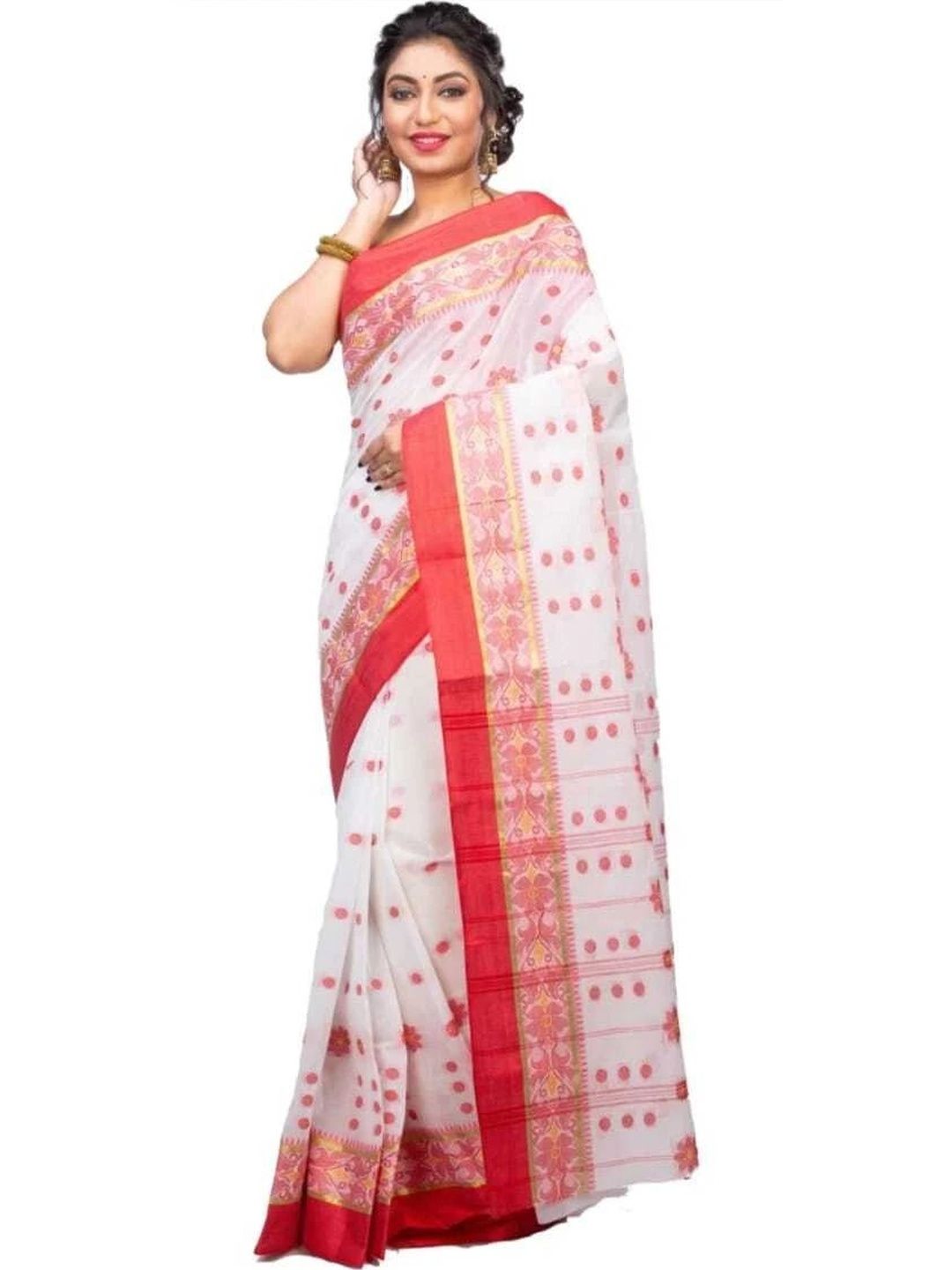
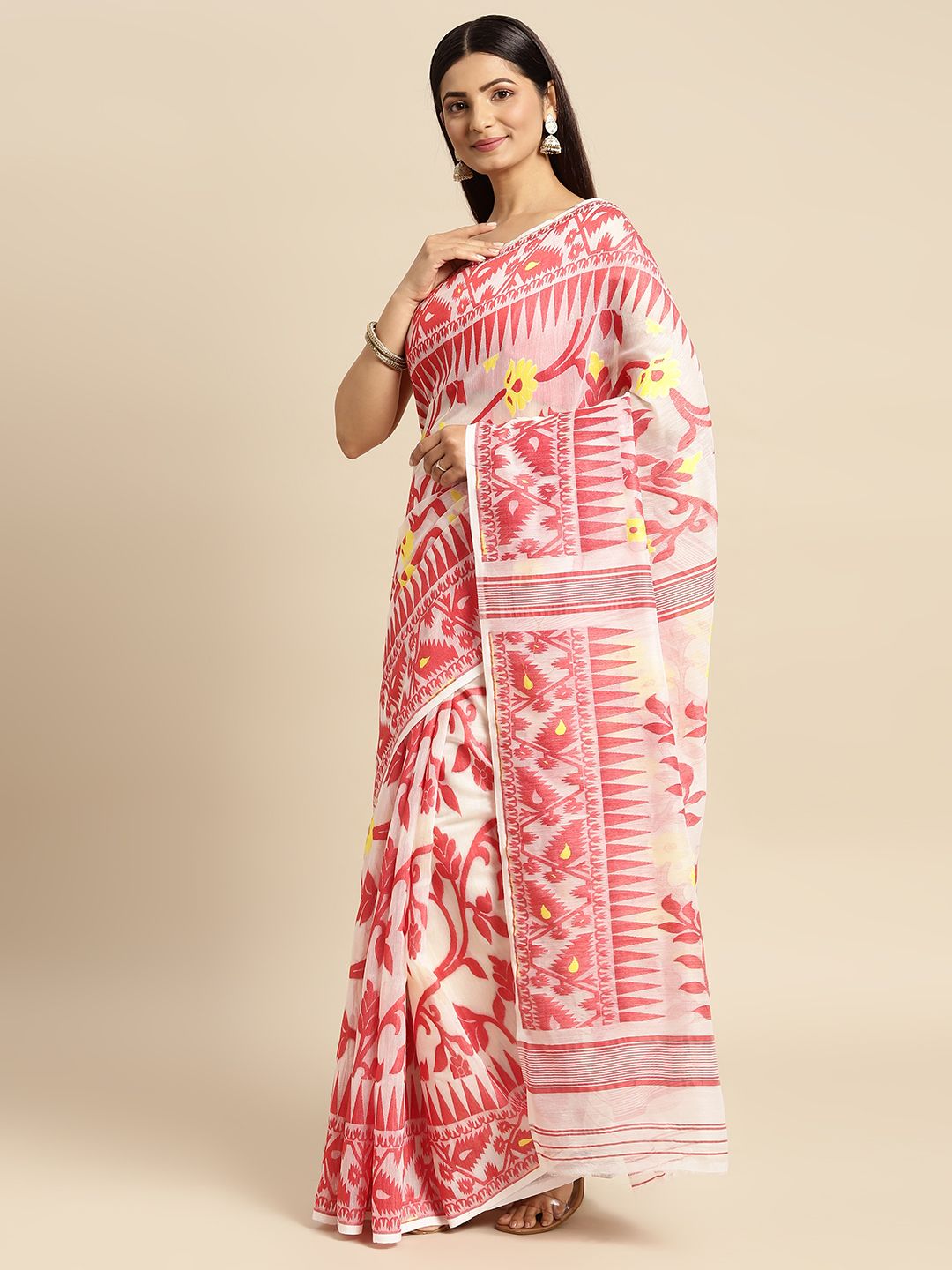
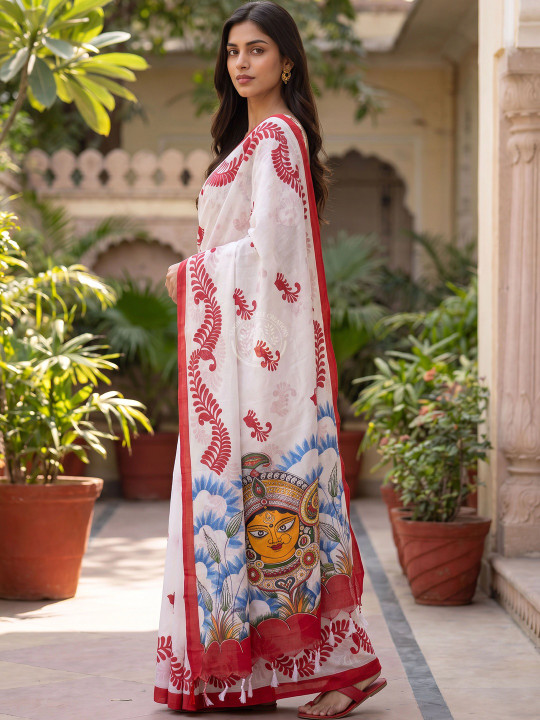
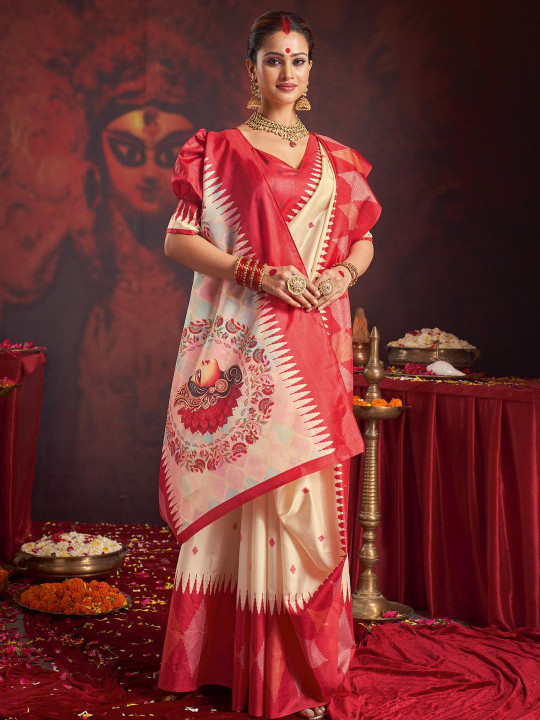
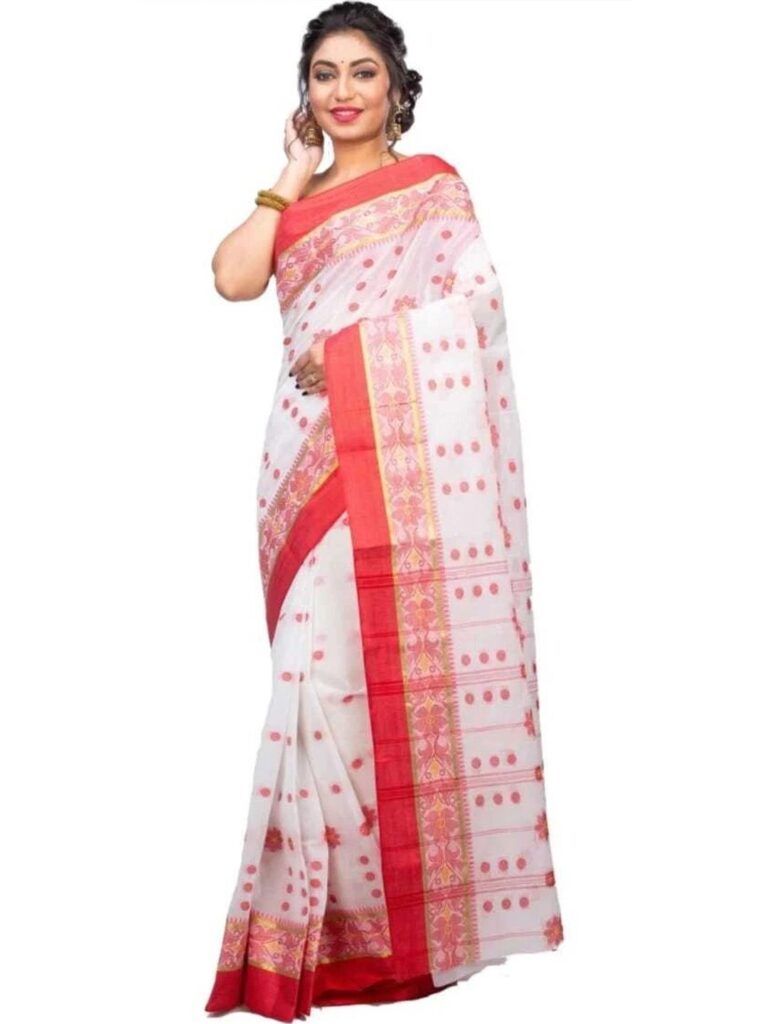
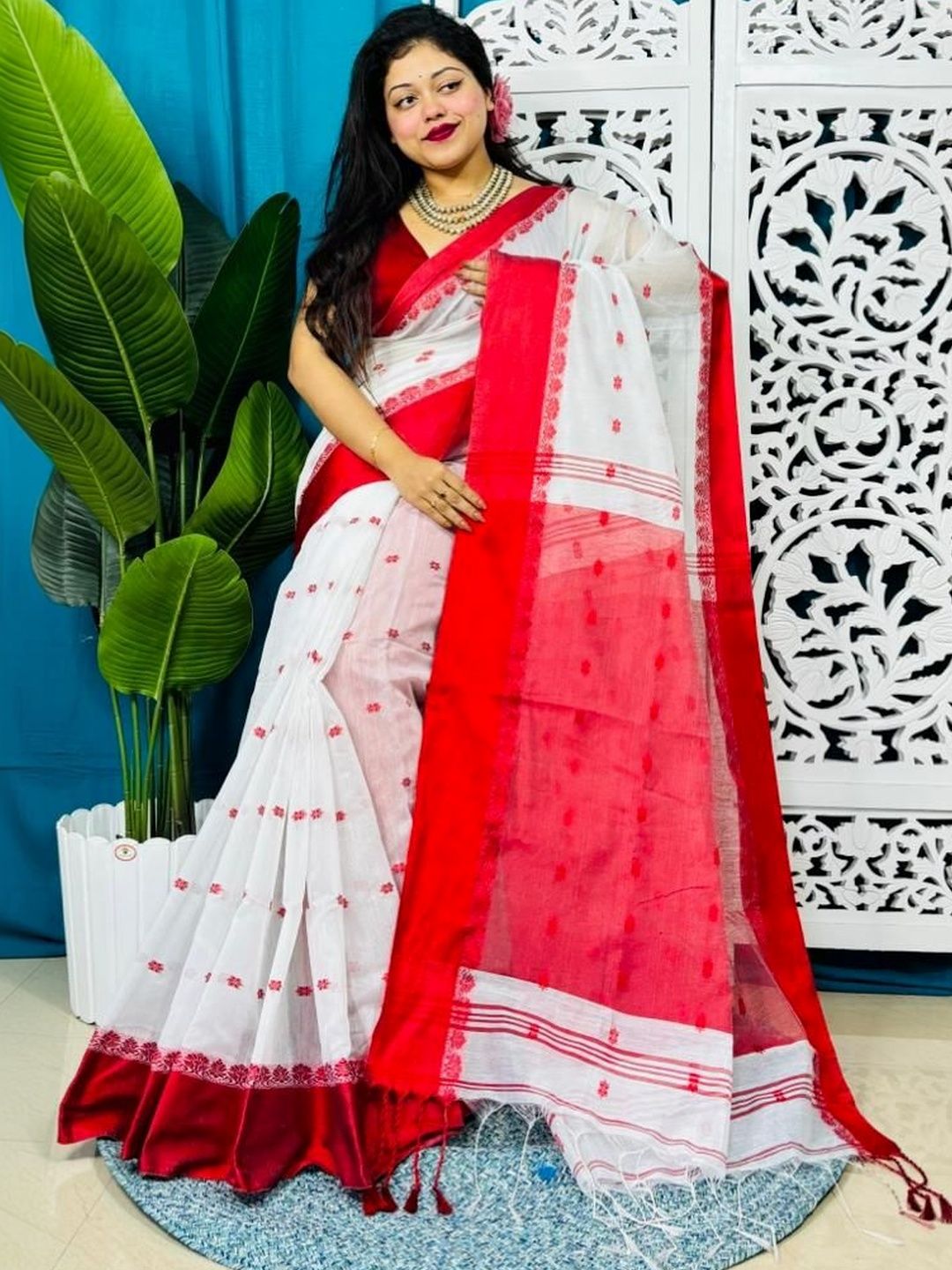
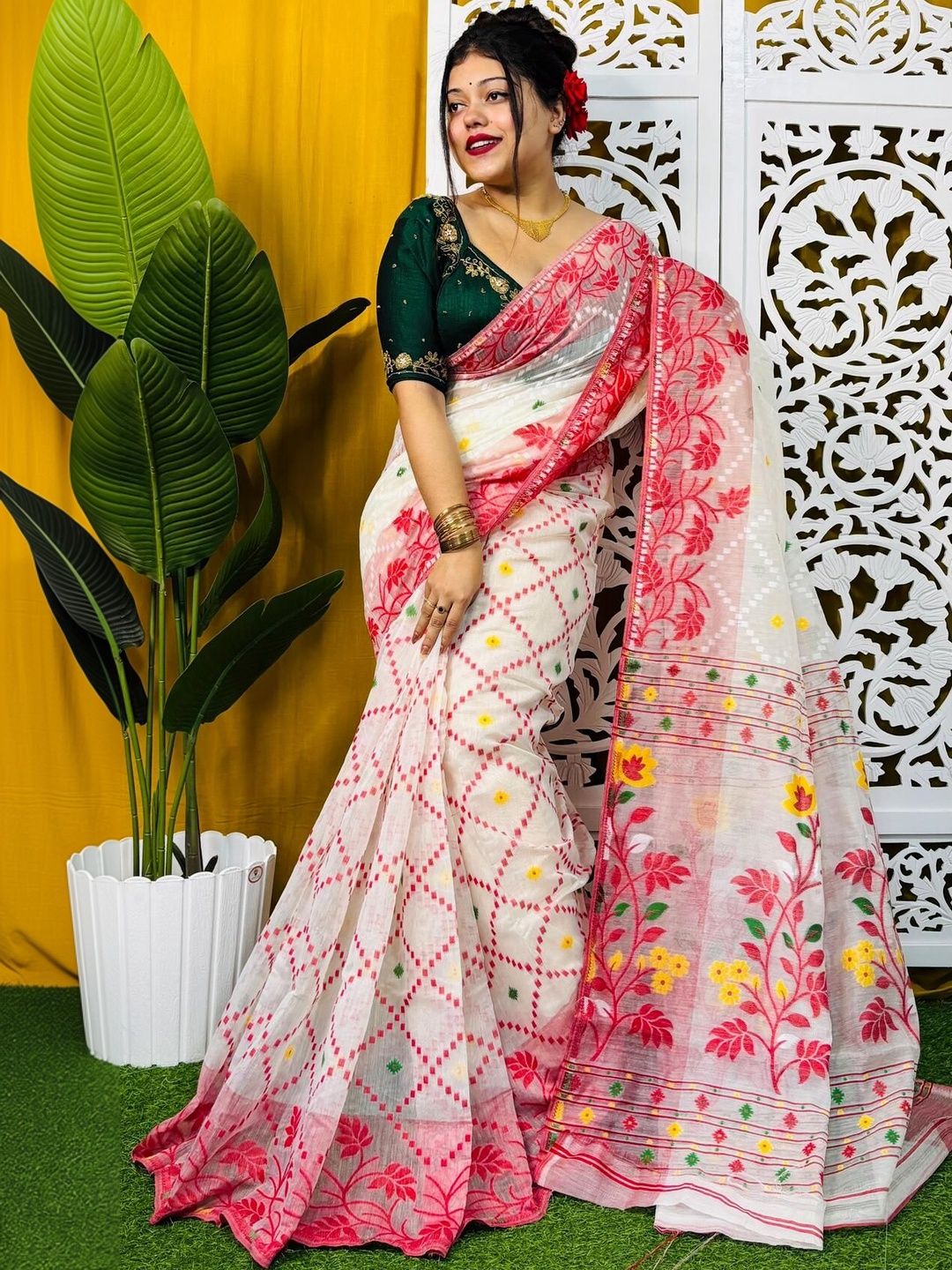
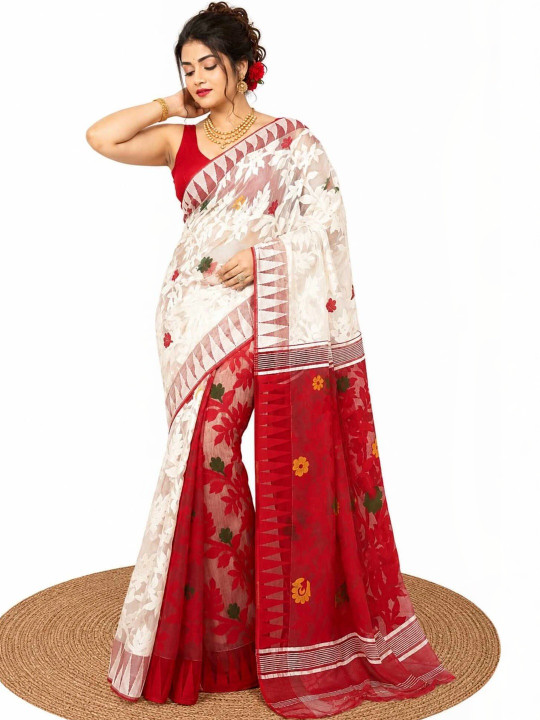
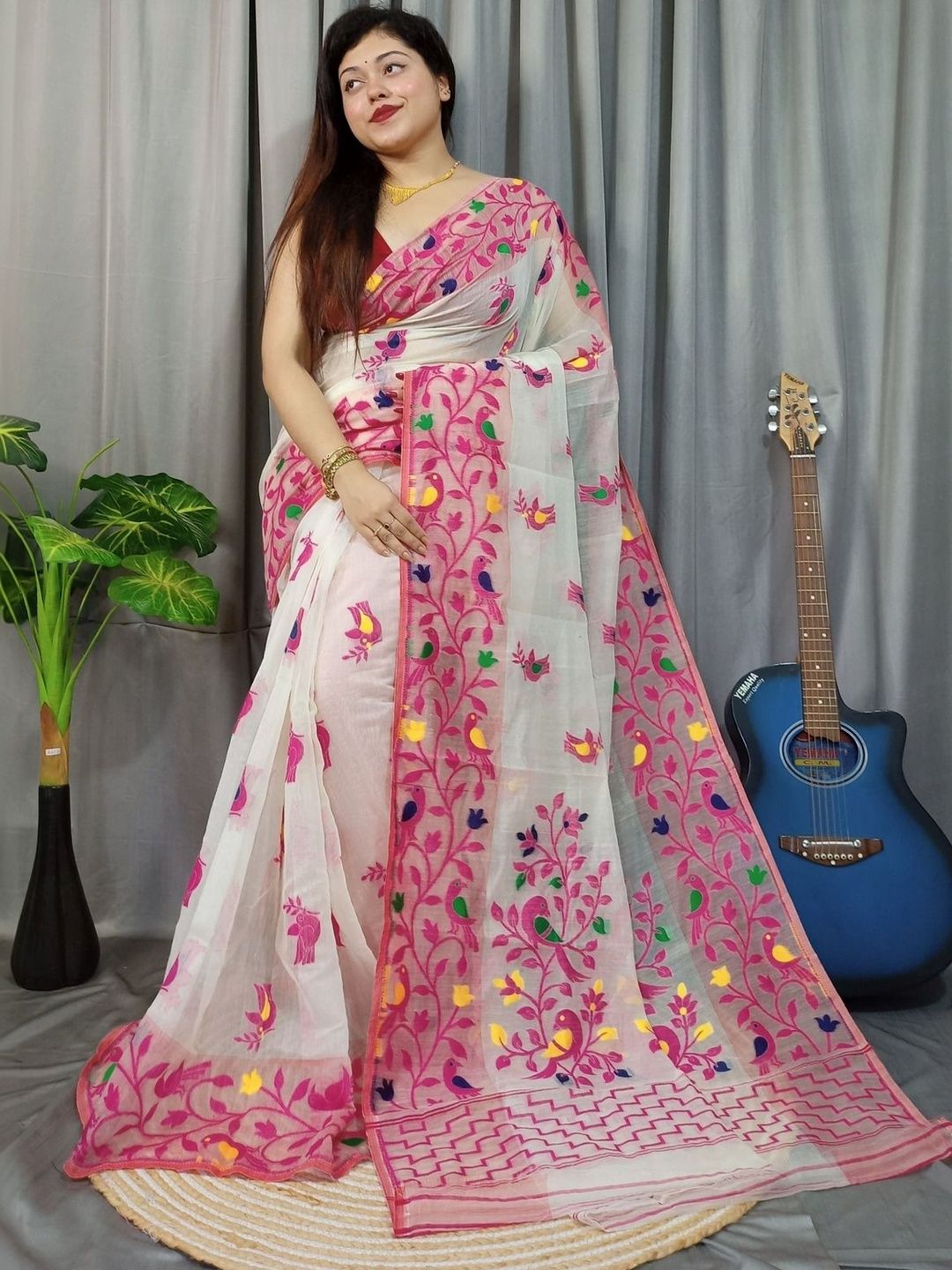
A white or cream cotton saree is the iconic Sindoor Khela outfit — the one that photographs most dramatically because the contrast between the white fabric and the spreading red sindoor is visually extraordinary. Many Bengali families have a dedicated white Sindoor Khela saree that is used year after year, becoming more richly marked with sindoor each time. A simple white tant or white cotton-silk saree with a red or gold border is the most traditional and beautiful choice. The saree should be simple — no heavy embellishment that the sindoor will obscure — and the fabric should be cotton or silk, not synthetic.
🌸
The Red Saree — Bold and Auspicious
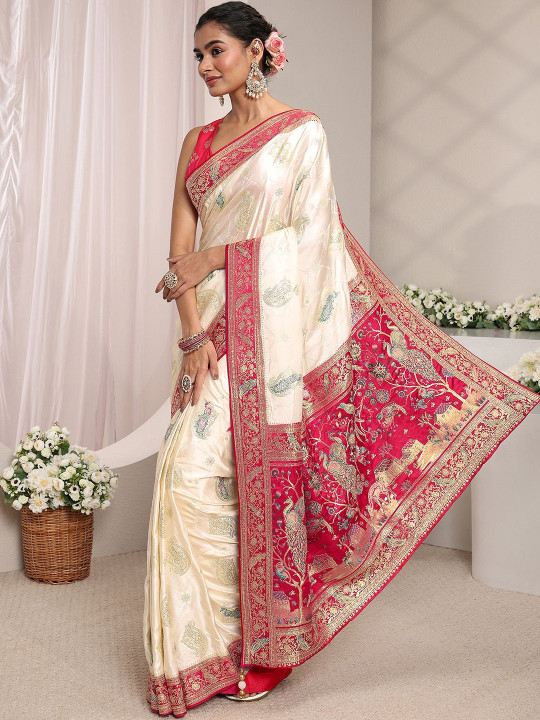
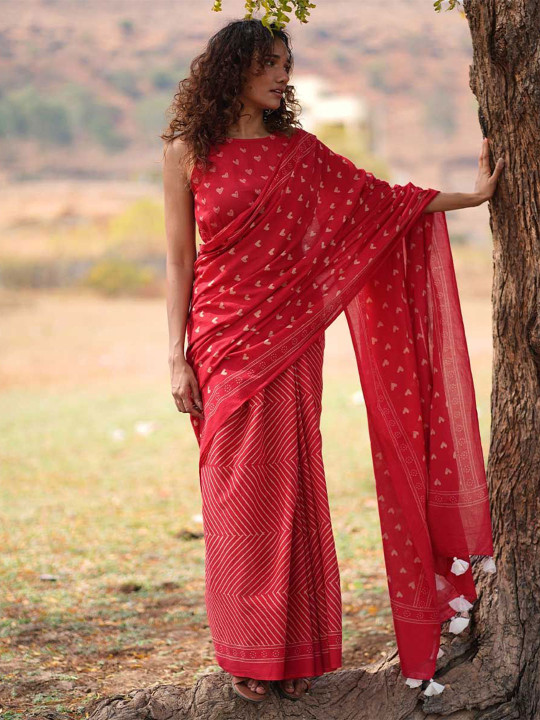
A red saree — the colour of sindoor itself — is an equally valid and deeply auspicious Sindoor Khela choice. When women in red sarees apply red sindoor to each other, the result is a layered, rich celebration of the festival’s dominant colour that looks extraordinary in photographs. Choose a simple red tant, a cotton-silk in red, or even a red Banarasi for those who want to dress up more formally. In many families, alternating between white one year and red the next is itself a tradition. The red saree also has the practical advantage of showing the sindoor less visibly — if you prefer not to have a permanently stained white saree, red is the wise choice.
✨
Practical Sindoor Khela Dressing Guide — Everything You Need to Know
Beyond the colour of the saree, here is the complete practical guide to dressing for Sindoor Khela in 2026. First and most importantly: accept that the outfit will be covered in sindoor, and dress with that in mind. Save your most expensive or delicate sarees for other days of Puja. Second, wear flat or very low-heeled sandals — the Sindoor Khela morning involves standing, moving, embracing, and possibly walking in a procession, and comfortable footwear is essential. Third, pin the pallu firmly at the shoulder — both hands will be free, busy applying sindoor to others, and a loose pallu becomes a liability in the close, energetic crowd of the ceremony. Fourth, keep jewellery minimal and secure — simple studs rather than dangling earrings, thin bangles (including the traditional sankha and loha for married women) rather than heavy bracelets. Fifth, and perhaps most importantly: do not worry too much about your hair, because it will be full of sindoor and marigold petals by the end of the morning, and it will be the most beautiful it has ever looked. Allow the ritual to do its work on your appearance as well as your soul.
🌴 What to Carry to Sindoor Khela
Preparation makes the difference between a meaningful Sindoor Khela experience and a chaotic one. Here is everything you should carry with you to the pandal on Vijaya Dashami morning.
🌸
Sindoor in a Plate
Carry your own sindoor in a small brass or clay plate (rather than plastic). Many families use special heirloom sindoor boxes (sindoor daani) for this occasion.
🌲
Dhuno (Coconut Husks)
If participating in the dhuno ritual, carry dry coconut husks and a small clay pot. Alternatively, share what the pandal committee provides.
🍙
Mishti Pan
Sweet betel leaf to share with the women around you — and to offer to the elders you touch the feet of during Shubho Bijoya.
🌸
Fresh Marigold Flowers
Loose marigold flowers and shiuli for offering to Maa Durga and for the hair — they photograph beautifully in the Sindoor Khela context.
📷
Sealed Phone Pouch
Your phone will be in danger from sindoor. A waterproof sealed pouch or a zip-lock bag is strongly recommended for protecting it during the khela.
🦔
Extra Sankha & Loha
For married women: carry your conch and iron bangles. Blow the conch at the appropriate moments — there is no sound more characteristic of this ritual.
🎬 How Sindoor Khela Has Evolved in the Modern Era
Like all living traditions, Sindoor Khela has changed over time — and the changes reflect broader shifts in Indian society that are worth understanding. Moreover, far from diminishing the tradition, many of these evolutions have actually strengthened it by bringing more people into its embrace.
The Traditional Form
Sindoor Khela was primarily a family and neighbourhood ritual — observed in smaller, intimate groups of women within the family’s puja space or local para (neighbourhood) pandal. Participation was limited to married Hindu women, and the ritual was largely undocumented outside its own community.
The Rise of Large‑Scale Celebrations
As Durga Puja grew into larger community and corporate events, Sindoor Khela at major pandals expanded significantly in scale. Photojournalists began documenting the tradition widely, and its images started appearing nationally and internationally — bringing widespread attention to what had been a relatively private ritual.
Social Media and the Global Audience
Social media transformed Sindoor Khela from a community tradition into a viral, globally recognised cultural moment. Instagram, Facebook, and eventually Reels brought the striking image of red-covered smiling women in white sarees to audiences across India and around the world — and significantly increased both participation and public conversation about who the tradition belongs to.
Expanding Inclusion & Cultural Conversation
The most recent evolution has been a significant conversation about inclusion — with many progressive puja committees formally welcoming unmarried women, widows, women of all backgrounds, and people of all gender identities to participate. Additionally, non-Bengali women across India have begun participating in Sindoor Khela as Indian cultural consciousness has become more self-aware and cross-community engagement at festivals has grown.
✨ UNESCO Recognition: In 2021, Durga Puja in Kolkata was inscribed on the UNESCO Representative List of the Intangible Cultural Heritage of Humanity — a recognition that celebrates not only the festival’s artistic and cultural significance but also its community-building power, of which Sindoor Khela is one of the most beautiful expressions.
❓ Frequently Asked Questions (FAQs)
Sindoor Khela is a Bengali ritual observed on Vijaya Dashami (the tenth and final day of Durga Puja) in which married women apply sindoor (vermillion) to Maa Durga’s idol and then to each other, as a farewell to the Goddess before she returns to Mount Kailash. It happens in the morning, before the Bisarjan (immersion) procession.
Traditionally, Sindoor Khela was for married women only, since sindoor is a symbol of the married state. However, many contemporary puja committees and progressive communities now welcome unmarried women, widows, and women of all backgrounds to participate. Check with the specific puja organisation about their traditions before attending.
A white or red cotton saree is the most traditional and appropriate choice. The saree will be covered in sindoor during the ritual — wear something you love but are happy to have permanently marked. Keep jewellery minimal and secure, choose flat footwear, and pin the pallu firmly so both hands remain free during the khela.
The white saree is worn so that the red sindoor applied during the ritual shows most dramatically — the contrast of white and red is both visually beautiful and symbolically significant. As the white saree becomes red with sindoor, it becomes a visual record of the celebration and the farewell. Many women have a dedicated Sindoor Khela saree that they wear year after year, each time adding another layer of the ritual’s memory to the fabric.
No — Sindoor Khela is observed wherever Durga Puja is celebrated by Bengali communities, including Delhi, Mumbai, Bangalore, Hyderabad, Chennai, and every Indian city with a significant Bengali diaspora. It is also celebrated by Bengali communities abroad, particularly in the USA, UK, and Australia.
Sindoor is the vermillion powder that is the ritual’s central element — it is the specific adornment of married women and carries significant spiritual weight. Abir is coloured powder (often red, but also other colours) that is not exclusively associated with married status and is sometimes used by unmarried participants or during other festive occasions like Holi. Some progressive Sindoor Khela celebrations use abir for non-married participants while married women use sindoor.
🌸 ✨ 💕
Sindoor Khela endures because it speaks to something universal beneath its specific cultural form: the need to mark important moments with the body, to share grief and joy with community, and to say goodbye to beauty while trusting that it will return. Every culture has its version of this need. Bengal’s version involves vermillion, white cotton, the sound of conch shells at the river’s edge, and the word that carries both farewell and promise in the same breath: Aashche bochor abar hobe.
Next year, this will happen again. And Maa Durga will come home. And the sindoor will fly. And everything will be red, and beautiful, and heartbreaking, and perfect.
Shubho Pujo — from all of us at GlamorEver. 🌸✨📍

Passionate software developer and entrepreneur dedicated to building innovative digital solutions. As the founder of glamorever.com, I combine technology, creativity, and business strategy to create valuable online experiences and resources for a global audience.