June 25, 2026
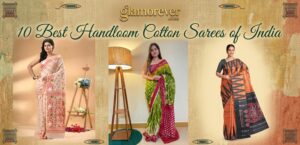
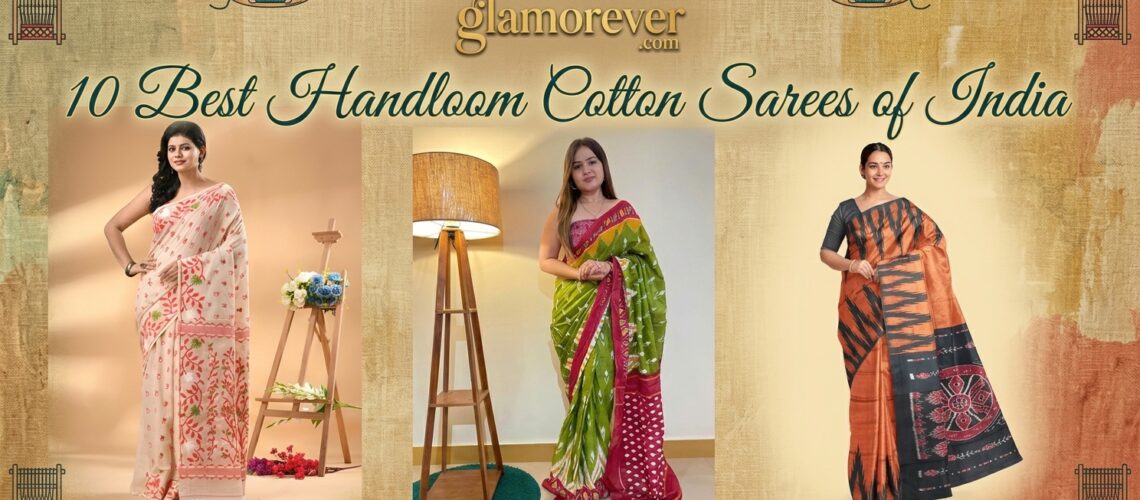
10 Best Handloom Cotton Sarees of India for Comfortable Everyday Wear
Because the most beautiful saree is one you can wear all day, breathe in freely, and still look effortlessly put-together. 🧵☀️
Let’s be honest — silk sarees are gorgeous, but most of us can’t wear them every single day. They need careful handling, they can feel heavy in the summer heat, and one unexpected splash of dal is enough to break your heart. That’s exactly where handloom cotton sarees come in — and honestly, they deserve far more love than they get.
Handloom cotton sarees are India’s everyday magic. Woven carefully by hand on traditional looms, using pure cotton threads, these sarees are breathable, durable, affordable, and surprisingly beautiful. Furthermore, they support thousands of weaver families across the country who have been practising these crafts for generations.
So whether you’re heading to the office, attending a casual family function, running morning errands, or simply want to wear something comfortable yet ethnic at home — a handloom cotton saree is your perfect answer. In this guide, we’re covering the 10 best handloom cotton sarees of India for daily wear, along with how to style them and what makes each one truly special. Let’s dive in!
1. Bengal Tant Saree — The Iconic Everyday Classic
📍 Fulia & Shantipur, West Bengal
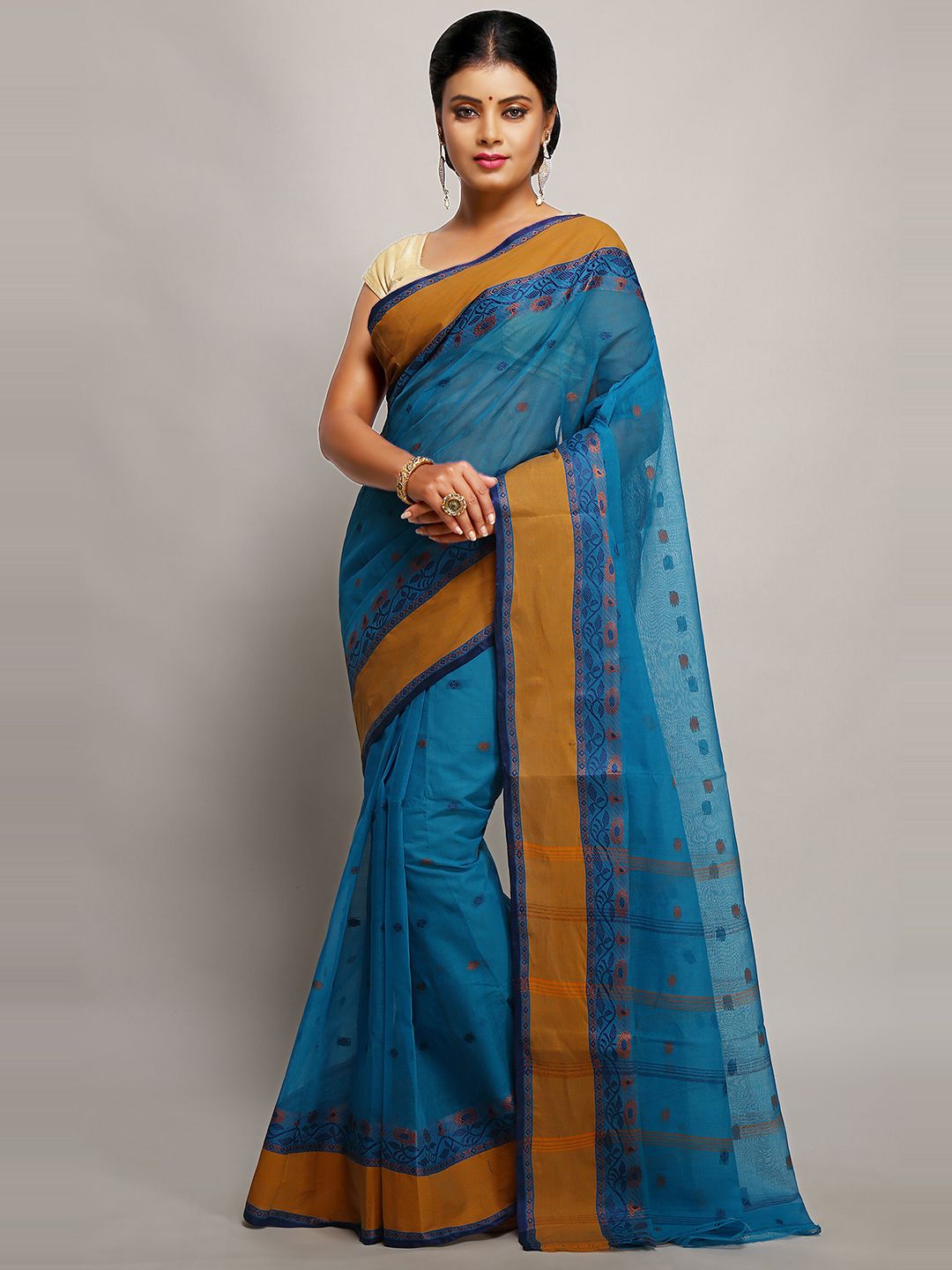
If there’s one cotton saree that has stood the test of time and daily wear, it’s the Bengal Tant. Ask any Bengali woman about her morning routine and she’ll tell you — the Tant saree is as natural and essential as her cup of cha. Woven primarily in the Nadia and Hooghly districts of West Bengal, the Tant saree has been the everyday uniform of Bengali women for over three centuries.
🔍 Why It Works So Well for Daily Wear
The Tant is made from very fine, plain-weave cotton that allows air to circulate freely. As a result, it stays cool even on the hottest summer afternoons in Bengal — which is saying a lot! The fabric has a characteristic crispness when new, and softens beautifully with each wash. Additionally, the minimal body design with a slightly heavier border makes it easy to drape repeatedly without excessive effort.
✨ Signature Colours & Patterns
The classic Tant comes in the iconic white with red border (lal paar) combination — a must-have for Durga Puja and auspicious occasions. However, modern Tant sarees are available in a rainbow of colours with woven geometric or floral borders, stripes, and even jamdani-inspired butis.
🎀 Style Tip: Pair a soft yellow Tant with a contrast navy blue blouse and a sleek bun with gajra for a fresh, Bengali-inspired everyday look. Simple, beautiful, and complete in minutes.
2.💎 Kota Doria Saree — Rajasthan’s Featherlight Wonder
📍 Kaithoon, Kota, Rajasthan
Imagine wearing a saree so light that it barely feels like you’re wearing one at all. That’s the Kota Doria experience. 🌬️ Originally created for the royal women of the Kota kingdom who needed something both elegant and wearable in Rajasthan’s intense heat, the Kota Doria is today one of the most sought-after everyday sarees across India.
🔍 The Square-Check That Sets It Apart
Kota Doria’s defining feature is its khat (square-check) pattern — formed by alternating cotton and silk threads in the weave. This creates a semi-transparent, open-weave texture that is incredibly breathable. Consequently, even in peak summer heat, a Kota Doria saree stays comfortable from morning to evening without becoming clingy or uncomfortable.
Plain vs Printed Kota Doria
Traditional Kota Doria is plain with just the check texture. Today, however, you’ll find gorgeous block-printed versions with Bagru, Dabu, and Ajrakh prints that add colour and character while keeping the weight the same. These printed versions are especially popular for office wear and daytime events.
🎀 Style Tip: A block-printed Kota Doria in indigo and white with a solid indigo blouse and silver oxidised jewellery is a perfect, polished look for office days and casual lunches.
3. Sambalpuri Cotton Saree — Odisha’s Ikat Treasure
📍 Sambalpur & Sonepur, Odisha
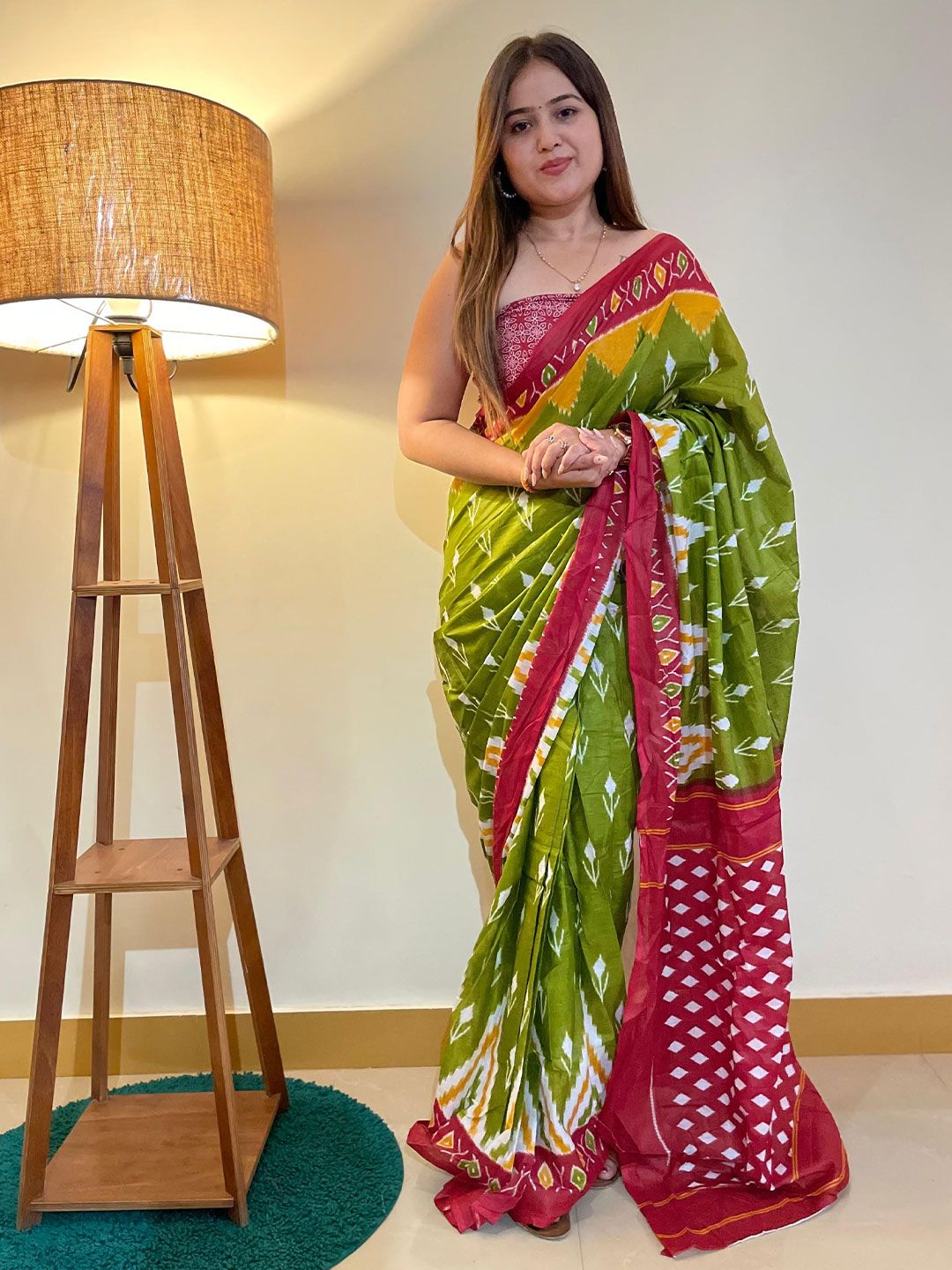
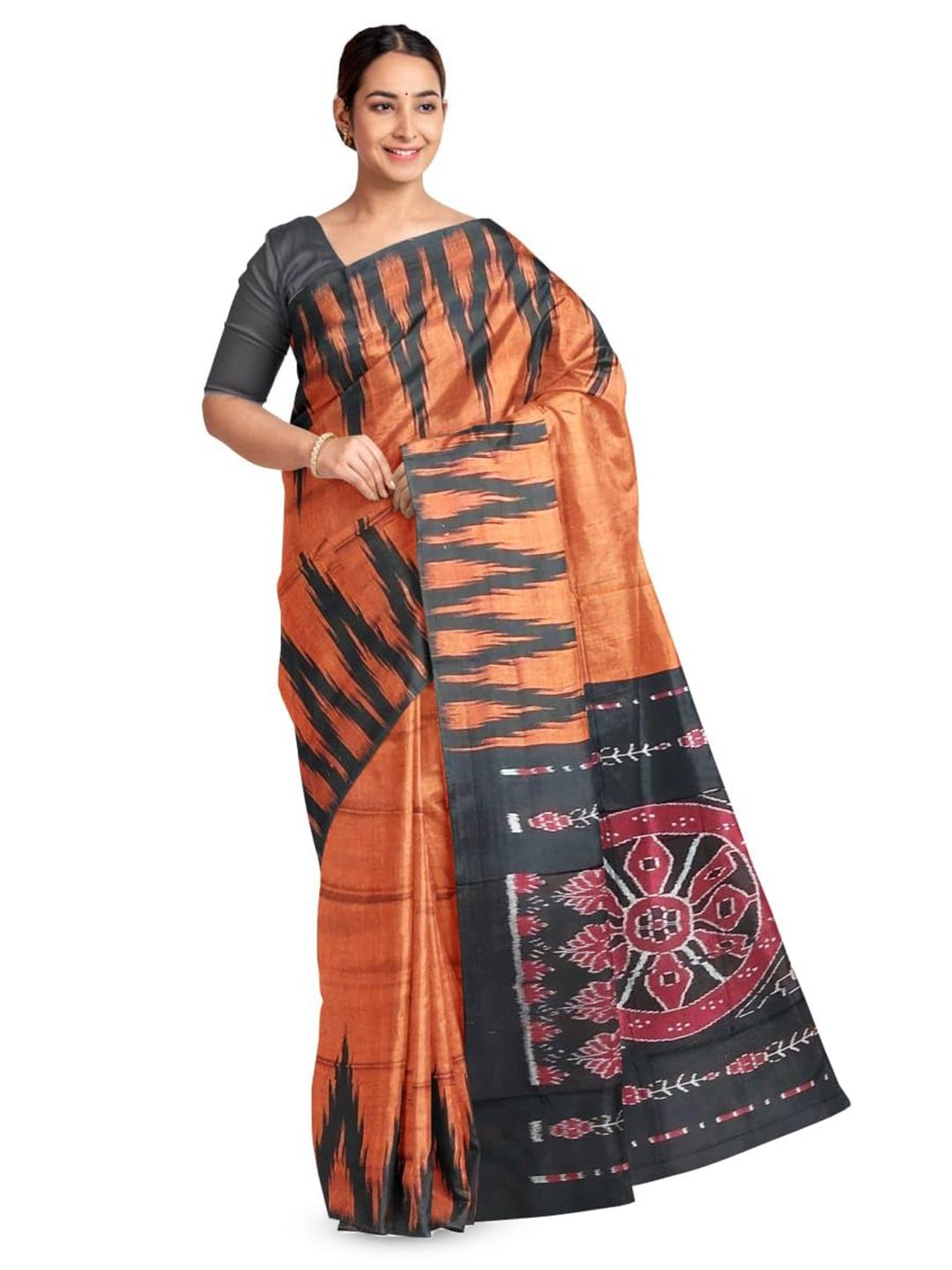
When it comes to handloom cotton sarees with bold, characterful designs, the Sambalpuri cotton saree from western Odisha has no competition. These sarees are made using the traditional Bandha (tie-and-dye Ikat) technique — a process where the threads are resist-dyed before weaving to create precise, repeating patterns.
🔍 Nature’s Motifs, Woven in Cotton
The motifs in Sambalpuri sarees are deeply rooted in the natural world and Odishan iconography — shankha (conch), chakra (wheel), phula (flower), and the iconic fish (machha) pattern. What makes it all the more fascinating is that these patterns are created purely through the dyeing and weaving process — no embroidery, no printing, no shortcuts. Furthermore, each saree can take several weeks to complete, which is why even cotton Sambalpuri sarees carry a distinct sense of craft and pride.
✨ Colour Palette
Sambalpuri cotton sarees are known for their rich, warm colour combinations — deep red with black borders, mustard yellow with green, ivory with maroon. These earth-toned palettes make them equally suited for daily wear and festive functions.
🎀 Style Tip: A mustard Sambalpuri cotton with a deep green blouse, silver tribal jewellery, and flat kolhapuris makes a striking everyday ethnic look for college, office, or casual outings.
4. Chanderi Cotton Saree — Delicate Beauty from MP
📍 Chanderi, Madhya Pradesh
While Chanderi is more famous for its silk-cotton blend, the pure Chanderi cotton variant is an absolute gem for everyday wear — and significantly underrated. Woven in the historical town of Chanderi in Madhya Pradesh, this saree has a refined, lightweight quality that makes it feel simultaneously traditional and modern.
🔍 The Buti That Makes It Magical
Authentic Chanderi cotton sarees are characterised by their woven buti (small floral or coin motifs) scattered across the body, combined with a slightly contrasting border. The weave is plain and fine, giving the saree a natural lustre without any synthetic shine. Moreover, because the buti is woven in (not printed or embroidered), it lasts the lifetime of the saree.
✨ When to Wear It
Chanderi cotton is ideal for morning pujas, office presentations, daytime weddings, and any occasion where you want to look put-together without trying too hard. It drapes beautifully and holds its shape well throughout the day.
🎀 Style Tip: A pale lavender Chanderi cotton with golden buti, a deep purple embroidered blouse, and pearl earrings is perfect for office meetings and small family functions.
“A good cotton saree is like a good friendship — comfortable, reliable, and always there when you need it most.”
— GlamorEver
5. Mangalagiri Cotton Saree — Andhra’s Everyday Icon
📍 Mangalagiri, Andhra Pradesh
The Mangalagiri saree from Andhra Pradesh is one of those handlooms that rewards you more the longer you wear it. Made in the town of Mangalagiri near Vijayawada, this cotton saree has a distinctive nizam border — a thick, woven pattern in contrast colour running along the edges — that sets it apart from every other everyday cotton saree.
🔍 The Grainy Texture That Ages Beautifully
Mangalagiri cotton has a unique grainy, slightly stiff texture when new, which gradually softens into a beautiful drape after a few washes. Traditionally, natural dyes were used to colour the yarn, giving Mangalagiri sarees their characteristic earthy depth. Additionally, the contrast between the plain cotton body and the richly-woven zari nizam border gives these sarees an elegant structure that works equally well for daily and semi-formal occasions.
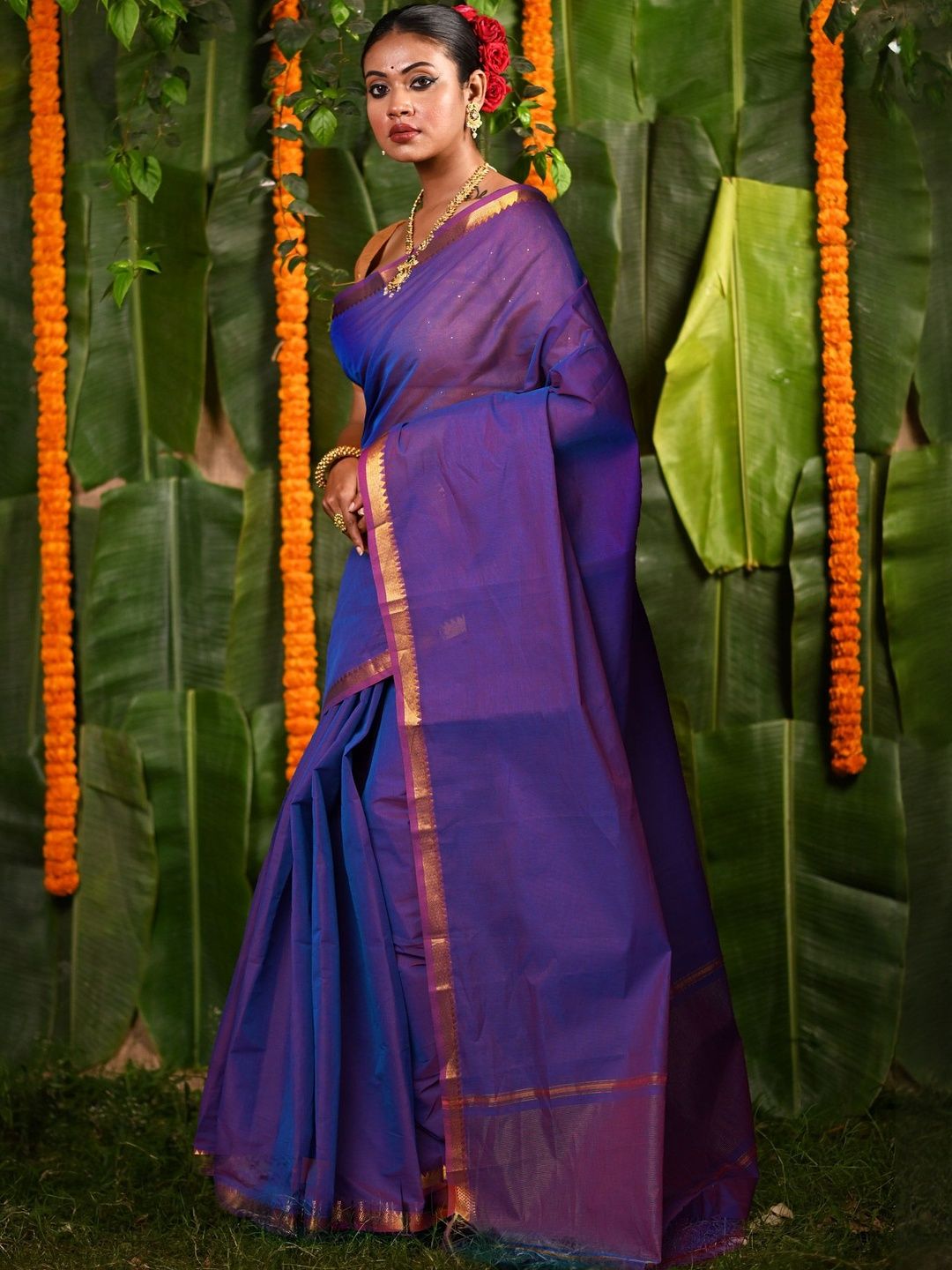
🎀 Style Tip: A brick red Mangalagiri with a thick golden border, paired with a matching cotton blouse and simple gold studs, is a smart and elegant choice for office wear or temple visits.
6.Ilkal Saree — Karnataka’s Crisp Weave Wonder
📍 Ilkal, Bagalkot, Karnataka
The Ilkal saree from northern Karnataka is one of those handlooms that looks far more expensive than it actually is — which is exactly why it’s such a brilliant everyday choice. With its characteristic tope teni pallu (a unique interlocking technique where the pallu threads are woven separately and joined to the body), the Ilkal has a structural elegance that is immediately recognisable.
🔍 Body in Cotton, Pallu in Art Silk
What makes the Ilkal unique is its combination of a cotton body with a contrasting art silk or cotton pallu. The body is typically in a solid colour with thin stripes near the border, while the pallu features rich red or maroon with traditional temple designs. As a result, the saree looks semi-festive but remains comfortable enough for daily wear throughout the day.
✨ Traditional Colours
Red, maroon, peacock blue, and dark green are the classic Ilkal palette — traditionally worn by women of the Lingayat community during weddings and religious occasions. Today, however, softer pastel versions are popular for everyday and office wear.
🎀 Style Tip: A peacock blue Ilkal with a maroon pallu and a simple gold blouse looks stunning at casual family gatherings and religious functions — without any extra effort.
7. Chettinad Cotton Saree — Tamil Nadu’s Bold Everyday Weave
📍 Karaikudi, Tamil Nadu
The Chettinad saree is bold, beautiful, and unapologetically itself. Coming from the Chettinad region of Tamil Nadu — a land known for its distinctive cuisine, architecture, and culture — these sarees carry the same bold confidence and rich character as the community they belong to. 🌶️
🔍 Checks, Stripes & Deep Colours
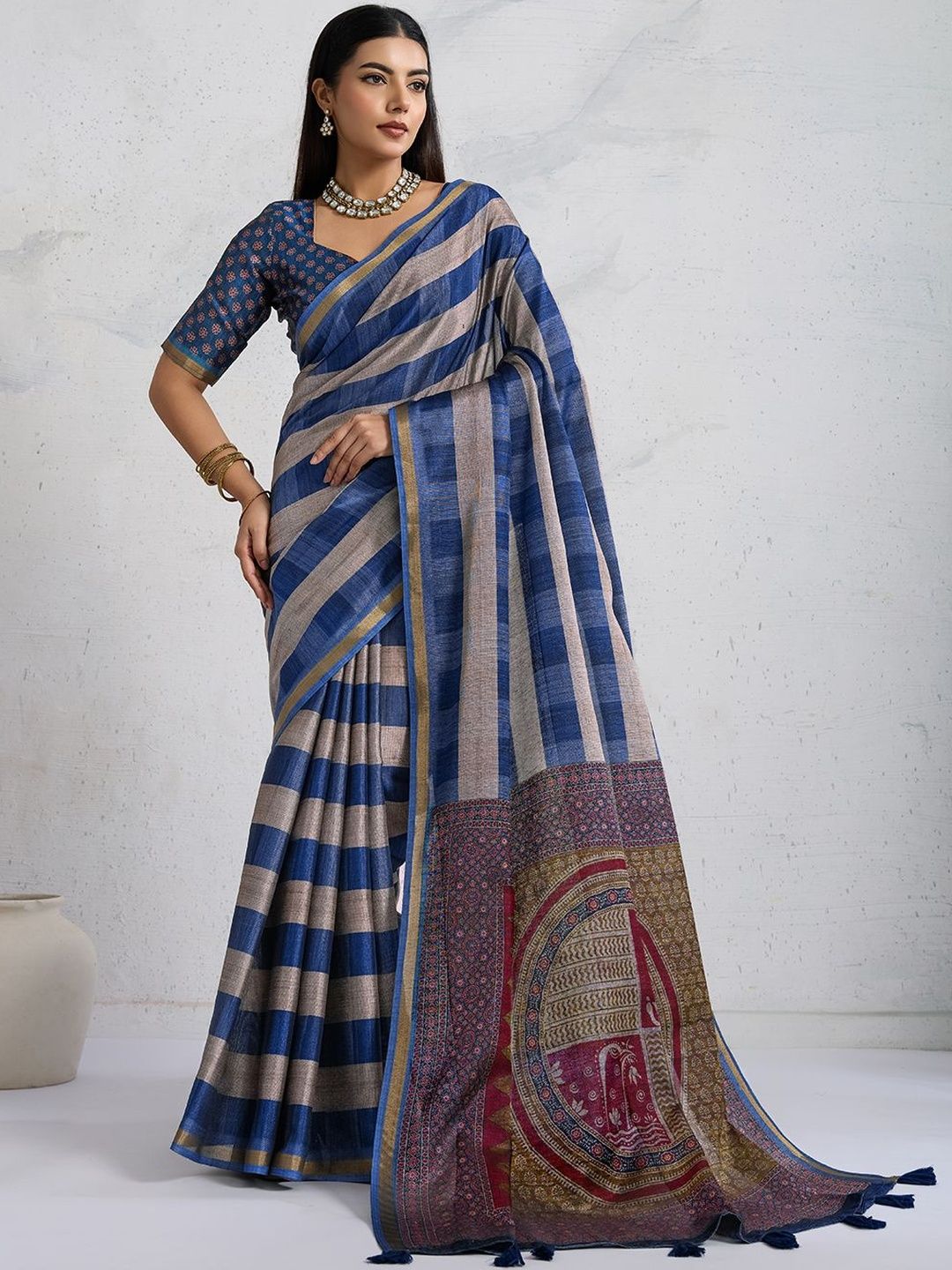
Chettinad cotton sarees are famous for their vibrant checks, broad stripes, and kalamkari-inspired colours. Woven on traditional pit looms, they use cotton threads dyed in deep, saturated colours — indigo, deep red, mustard, and forest green being the most iconic. Furthermore, many Chettinad sarees feature a thick contrast border with simple woven motifs that add structure without complication.
✨ Best For
Chettinad cotton is particularly beloved by women who wear sarees daily to work — teachers, government employees, and college professors across Tamil Nadu especially favour these for their durability, easy maintenance, and no-fuss appeal.
🎀 Style Tip: A deep indigo Chettinad with a mustard yellow check paired with a simple matching blouse and black beaded necklace (metti-style) is effortlessly stylish for everyday wear.
8. Gadwal Cotton Saree — Telangana’s Lightweight Stunner
📍 Gadwal, Jogulamba, Telangana
The Gadwal saree is often spoken about in the context of silk, but the pure cotton Gadwal is an equally magnificent everyday choice that doesn’t get nearly enough attention. From the small town of Gadwal in Telangana, this saree is traditionally woven for the women of the Deccan — combining cotton’s comfort with a distinctly regal pallu.
🔍 Where Cotton Meets Zari
The magic of Gadwal cotton lies in its pure cotton body paired with a heavily woven zari or silk pallu. The body is plain and light, while the pallu carries rich temple borders and geometric patterns in gold or silk thread. As a result, you get the breathability of cotton throughout the day and the visual richness of a silk saree from the waist down — truly the best of both worlds.
🎀 Style Tip: Wear a cream Gadwal cotton with a golden zari pallu and a deep maroon silk blouse for Sankranti, Ugadi, or family puja days — comfortable all morning and gorgeous all evening.
9.Maheshwari Cotton Saree — MP’s Royal Weave, Simplified
📍 Maheshwar, Madhya Pradesh
There’s a quiet, understated royalty to a Maheshwari saree. Created by the legendary queen Ahilyabai Holkar in the 18th century to revive the weaving traditions of Maheshwar, this saree combines cotton with silk in a way that is refined, graceful, and wonderfully wearable. The pure cotton version is especially popular among women who want an everyday saree with a touch of heritage. 🏛️
🔍 The Five-and-One Reversal Pallu
A genuine Maheshwari saree can be identified by its reversible pallu — five stripes followed by one stripe in the alternate direction. This isn’t just a design quirk; it’s a weaving signature that authenticates the saree’s origin. Furthermore, the borders of a Maheshwari often carry distinctive rudraksha, chatai (mat), and heera (diamond) patterns woven in contrasting thread.
✨ Why It Stands Out Daily
Maheshwari cotton has a natural, soft lustre that makes it look more expensive than it is. Additionally, the saree holds a beautiful drape and doesn’t crumple easily — meaning you can wear it all day without constant readjustment, which is a genuine blessing for working women.
🎀 Style Tip: A dusty rose Maheshwari cotton with a golden border, a contrast cream blouse, and delicate rose-gold jewellery is an elegant, understated choice for office wear or a daytime family celebration.
10. Bengal Jamdani Cotton Saree — The Muslin Heir
📍 Dhaka tradition, West Bengal & Bangladesh
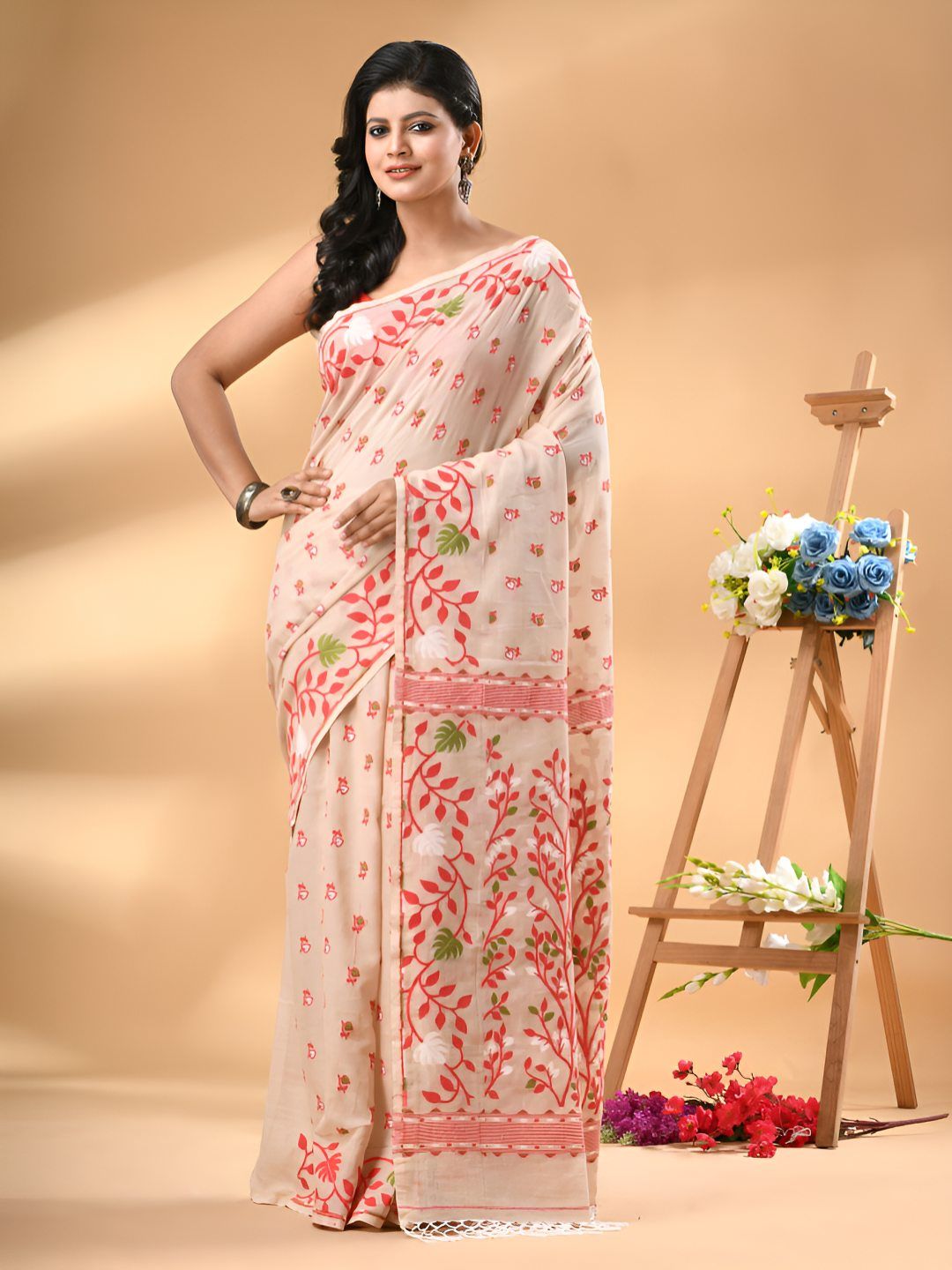
Saving the most extraordinary for last — the Jamdani cotton saree is arguably the most technically complex handloom cotton fabric in the world. Recognised by UNESCO as an Intangible Cultural Heritage, Jamdani weaving involves supplementary weft technique where floral and geometric motifs are woven directly into fine muslin cotton — without any design printing or embroidery. Every single motif is created thread by thread on the loom. 🏅
🔍 Art That You Can Wear Every Day
Traditional Jamdani from Dhaka (Dhakai Jamdani) uses extremely fine muslin thread, making it sheer and delicate. However, the Bangladeshi and West Bengali versions available today use slightly sturdier cotton, making them absolutely practical for daily wear while retaining the gorgeous woven motifs. Consequently, a Jamdani cotton saree is perhaps the only piece of clothing you can wear to both a museum visit and a morning office meeting and look equally appropriate at both.
✨ Caring for Jamdani
Since Jamdani is a delicate weave, it benefits from hand-washing in cold water and drying in shade. However, it doesn’t require dry-cleaning like silk, making it practical despite its heritage status. The motifs stay intact wash after wash — a testament to the skill of the weaver.
🎀 Style Tip: A white or ecru Jamdani with silver or grey woven motifs, a contrasting dark blouse, and simple silver jewellery is timeless, sophisticated, and perfectly balanced for any daytime occasion.
📊 Quick Comparison — All 10 Cotton Sarees at a Glance
| # | Saree | State | Fabric | Best For | GI Tag |
|---|---|---|---|---|---|
| 1 | Bengal Tant | West Bengal | Pure cotton | Home & everyday | ✅ Yes |
| 2 | Kota Doria | Rajasthan | Cotton-silk | Summer office | ✅ Yes |
| 3 | Sambalpuri Cotton | Odisha | Pure cotton | Casual festive | ✅ Yes |
| 4 | Chanderi Cotton | Madhya Pradesh | Pure cotton | Office & events | ✅ Yes |
| 5 | Mangalagiri | Andhra Pradesh | Cotton-silk border | Office daily | ✅ Yes |
| 6 | Ilkal Cotton | Karnataka | Cotton body | Functions & daily | ✅ Yes |
| 7 | Chettinad Cotton | Tamil Nadu | Pure cotton | Work wear | ✅ Yes |
| 8 | Gadwal Cotton | Telangana | Cotton + zari pallu | Festive daily | ✅ Yes |
| 9 | Maheshwari Cotton | Madhya Pradesh | Cotton-silk blend | Office & puja | ✅ Yes |
| 10 | Bengal Jamdani | West Bengal | Fine cotton | All occasions | ✅ Yes |
🧺 How to Care for Your Handloom Cotton Sarees
Handloom cotton sarees are wonderfully low-maintenance — but a little care goes a long way in keeping them beautiful for years. Here’s what every saree lover should know. 🌿
1. Wash in Cold Water
Always use cold water to hand-wash. Hot water causes shrinkage and can fade natural dyes faster.
2. Use Mild Detergent
Use a gentle liquid detergent or reetha (soapnut) powder. Avoid bleach entirely — it destroys natural fibres.
3. Dry in Shade
Dry your cotton sarees in the shade, not under direct harsh sunlight, to prevent colour fading over time.
4. Iron on Medium Heat
Cotton takes ironing well. Use medium heat with a slightly damp cloth for a crisp, professional finish.
5. Store in Muslin
Fold and store in breathable muslin or cotton pouches. Avoid plastic bags — they trap moisture and damage fibres.
6. Refold Periodically
Refold along different lines every few months to avoid permanent crease lines in the same spots.
Frequently Asked Questions (FAQs) ❓
Q1: Which handloom cotton saree is best for everyday office wear?
Mangalagiri, Chanderi cotton, Maheshwari cotton, and Kota Doria are the top picks for office wear. They look polished and structured, drape neatly throughout the day, and are lightweight enough to wear comfortably in air-conditioned environments without feeling too casual.
Q2: Which cotton saree is most breathable for Indian summer heat?
For peak Indian summers, Kota Doria and Bengal Tant are the most breathable options. Kota Doria’s open-weave khat texture allows maximum air circulation, while Tant’s fine plain weave keeps the skin cool even in humid Bengal summers.
Q3: Can handloom cotton sarees be machine washed?
While most handloom cotton sarees can technically be machine washed on a gentle cold cycle in a mesh laundry bag, hand-washing is always the safer choice. For sarees with zari borders or woven motifs (like Jamdani, Gadwal, or Maheshwari), always hand-wash to protect the metallic threads and woven designs.
Q4: What is the price range of genuine handloom cotton sarees?
Handloom cotton sarees are available across a wide price range. Tant and Chettinad sarees can start from as low as ₹400–₹800. Mangalagiri and Ilkal range from ₹800–₹2,500. Sambalpuri, Chanderi, and Maheshwari typically range from ₹1,500–₹6,000. Jamdani, being the most labour-intensive, can range from ₹3,000 to ₹25,000+ depending on the fineness of the weave.
Q5: Which handloom cotton saree is best for a beginner who's just starting to wear sarees daily?
For absolute beginners, Kota Doria or Chanderi cotton are the best starting points — both are lightweight, easy to drape because they don’t slip excessively, and forgiving for imperfect pleats. Mangalagiri is also a great beginner choice for its slightly stiffer texture that holds its shape without much adjustment.
Q6: Where can I buy authentic handloom cotton sarees online in India?
You can find genuine handloom cotton sarees on Amazon India (filter by GI tag), Myntra’s handloom section, Nykaa Fashion, government portals like Tribes India and state emporium websites, as well as weaver-direct platforms like Craftsvilla and the Handloom Mark certified sellers.
Find Your Perfect Everyday Handloom Saree
Explore GlamorEver’s hand-picked collection of authenticated handloom cotton sarees — curated for the modern Indian woman who loves her roots. 🌿
Final Thoughts — Cotton Is Never Just “Ordinary”
Somewhere along the way, we started associating cotton with “casual” and silk with “special.” But the truth is, a handloom cotton saree — woven by hand, thread by thread, carrying centuries of craft — is anything but ordinary. It is, in many ways, the most honest and wholesome thing you can wear.
Whether it’s a crisp Kota Doria on a sweltering Monday morning, or a pristine Tant saree on Bijoya Dashami, or a bold Sambalpuri at the office on a Friday — a handloom cotton saree never lets you down. Furthermore, every time you choose a handloom over a mill-made imitation, you’re directly supporting a weaver family, keeping an ancient craft alive, and wearing something that simply cannot be replicated by a machine.
So the next time you’re looking for your everyday saree, skip the synthetic easy-drape and reach for a handloom cotton instead. Your skin, your style, and India’s weavers will all thank you for it.
Which handloom cotton saree is your everyday favourite? Share in the comments — we’d love to know!
Passionate software developer and entrepreneur dedicated to building innovative digital solutions. As the founder of glamorever.com, I combine technology, creativity, and business strategy to create valuable online experiences and resources for a global audience.