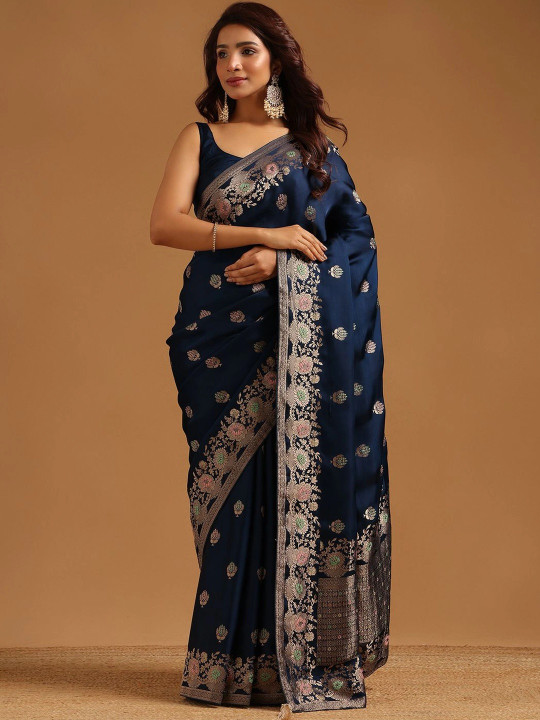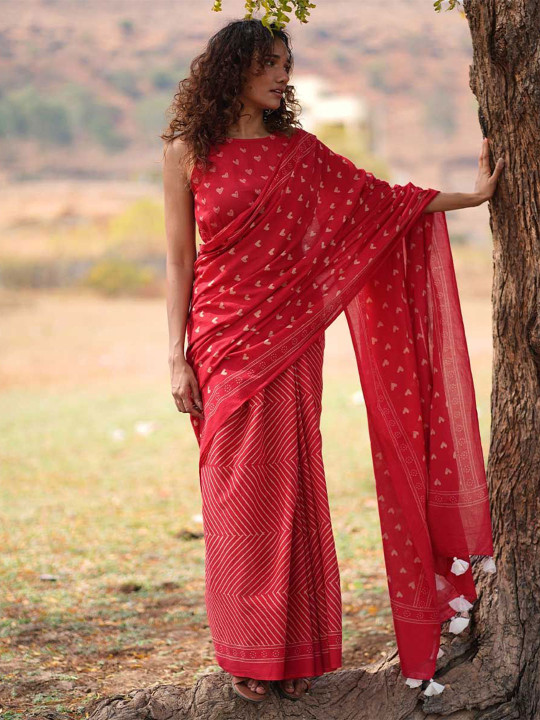
Best Durga Puja Special Saree Ideas for Women

Best Durga Puja Special Saree Ideas for Women:
Traditional & Stylish Looks

Five days, five distinct moods, and the most beautiful sarees in all of India — your complete guide to dressing for every moment of Durga Puja 2026. 🌸✨

There is a particular kind of magic that only happens during Durga Puja — the smell of shiuli flowers in the October air, the beat of the dhak drum carrying across the neighbourhood, and everywhere you look, women in the most beautiful sarees they own.

Durga Puja is not just Bengal’s biggest festival — it is, by several measures, one of the largest cultural events in the world, an occasion that UNESCO has recognised as an Intangible Cultural Heritage of Humanity. And at the centre of its visual and cultural identity are the sarees. From the white-and-red garad saree worn for the morning puja on Saptami to the jewel-toned silk for the Sandhi Puja on Ashtami, from the casual tant for pandal hopping to the statement Dhakai Jamdani for Dashami sindoor khela — Durga Puja saree dressing is one of the most nuanced, culturally layered, and genuinely joyful fashion traditions in India.

In 2026, Durga Puja will be observed with a renewed sense of celebration and cultural pride across Bengal and among the enormous Bengali diaspora spread across Delhi, Mumbai, Bangalore, and every major Indian city. Whether you are celebrating in Kolkata itself, at your local puja committee in another city, or experiencing Durga Puja for the first time, this guide will give you everything you need to dress with both cultural understanding and personal style. We have covered the five days of the festival individually, the major Bengali weaves you should know about, contemporary saree looks for modern women, blouse trends for 2026, pandal-hopping styling tips, and a complete FAQ. Let us begin. 🌸📍

📌 Durga Puja 2026 — Quick Overview

  • 🌸Duration: Five main days — Shashthi, Saptami, Ashtami, Navami, and Dashami — with Mahalaya marking the festival’s spiritual beginning a week earlier.
  • 🧇The saree tradition: Bengali women traditionally wear a different saree on each of the five days, with each day having its own associated colour palette and dress code.
  • 🌎The Garad tradition: The iconic white-and-red garad (or Garadh) saree is the most traditional Durga Puja look — worn for morning puja, particularly on Ashtami, by married women across Bengal.
  • 🌹Sindoor Khela (Dashami): The final day’s signature tradition — married women apply sindoor to each other and to the Goddess’s idol — is typically observed in a red or white saree.
  • 🌻Pandal hopping: The uniquely Bengali practice of visiting multiple decorated pandals in the evenings is as much a fashion event as a spiritual one — and calls for a completely different approach to saree styling.

🌸 Why the Saree Is the Heart of Durga Puja Dressing

In a country where festive fashion spans every possible category — from lehengas and Anarkalis to co-ord sets and gowns — Durga Puja remains one of the very few festivals where the saree is not just dominant but genuinely uncontested. Ask any Bengali woman what she is wearing for Puja, and she will almost certainly describe a saree — and not just one, but a carefully considered different saree for each of the five days.

This is partly tradition and partly aesthetics, but it is also partly the unique nature of Durga Puja’s celebration itself. The festival involves early morning puja, afternoon rest, and then long, social, music-filled evenings of pandal hopping — which means the Durga Puja saree must be simultaneously devotional enough for a temple ritual, comfortable enough for a long evening of walking, and beautiful enough to photograph magnificently under the extraordinary pandal lighting that Kolkata and every other Bengali community erects for the occasion.

Furthermore, the weaves of Bengal — Tant, Dhakai Jamdani, Baluchari, Kantha, Bishnupuri — are among the most extraordinary in the entire Indian handloom tradition, and Durga Puja is the moment when these heritage fabrics are celebrated most visibly and most publicly. When you wear a handwoven Tant or an authentic Dhakai Jamdani to the Puja, you are not just making a fashion choice — you are participating in a cultural preservation that stretches back centuries.

🌸 The new sari tradition: It is a deeply loved Bengali custom that women receive at least one new saree as a Pujo gift from family — typically from their husband, parents, or in-laws. This “Pujo saree” is saved specifically for the festival and is worn with special care and sentiment. If someone gifts you a saree for Durga Puja, it is one of the most affectionate things they can do.
🌎 Day-by-Day Durga Puja Saree Guide 2026

One of the most distinctive aspects of Durga Puja saree culture is the day-specific dressing tradition. Different families follow different specific rules, but the broad colour and fabric associations for each day have a shared cultural logic that is worth understanding before you plan your five looks. Here is a complete guide to what works beautifully for each day.

Day 1 · Shashthi

The Arrival of the Goddess — Festive & Welcoming 🌻

Shashthi marks the formal arrival of Maa Durga in her earthly home, and the mood is one of joyful anticipation and welcome. It is the day the Goddess’s eyes are unveiled (Chokkhu Daan) and the pandals fill with their first large crowds. The saree for Shashthi should be festive and energetic — something that says “the celebrations have begun.” Most women choose a saree that is beautiful but slightly less formal than their Ashtami look, since the biggest dressing moments of the festival are still ahead.

🌻 Best Pick: Yellow or Turmeric Tant

A bright yellow or turmeric-toned tant saree with a contrast border is the quintessential Shashthi look — warm, welcoming, and unmistakably festive. The colour mirrors the marigold flowers adorning the pandal.

🧇 Alternative: Cotton-Silk Saree

A cotton-silk in a warm jewel tone — teal, mustard, or rust — is a comfortable and beautiful Shashthi choice, especially for those who will be at the pandal for a long evening of socialising.

Day 2 · Saptami

Morning Puja & First Pandal Hop — Traditional & Graceful ✨

Saptami is the day the main Durga Puja begins in full earnest — the Saptami puja in the morning, the Nabapatrika snan (ritual bathing of the nine plants that represent the Goddess), and in the evening, the first major pandal hopping night. This creates a wonderful wardrobe challenge: you need a saree suitable for a morning ritual and the long, energetic evening that follows. Many Bengali women choose to dress in traditional or semi-traditional style on Saptami morning, then either change or continue with the same saree into the evening depending on comfort and schedule.

🌸 Best Pick: Tant in White or Cream

A crisp white tant with a red or gold border is deeply appropriate for the Saptami morning puja. The clean simplicity of the fabric matches the devotional spirit of the morning ritual beautifully.

🎙️ Evening Option: Kantha Stitch Saree

For the Saptami evening pandal hop, a vibrant Kantha stitch saree — with its characteristic running-stitch embroidery in bright colours on soft cotton — is both culturally specific and visually stunning in the pandal lighting.
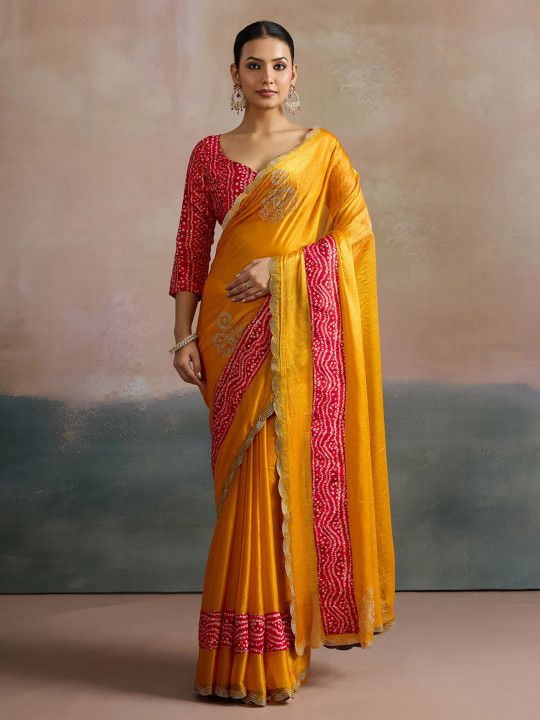
Day 3 · Ashtami — The Most Sacred Day

The Garad Tradition & Sandhi Puja — The Grand Statement 🌸

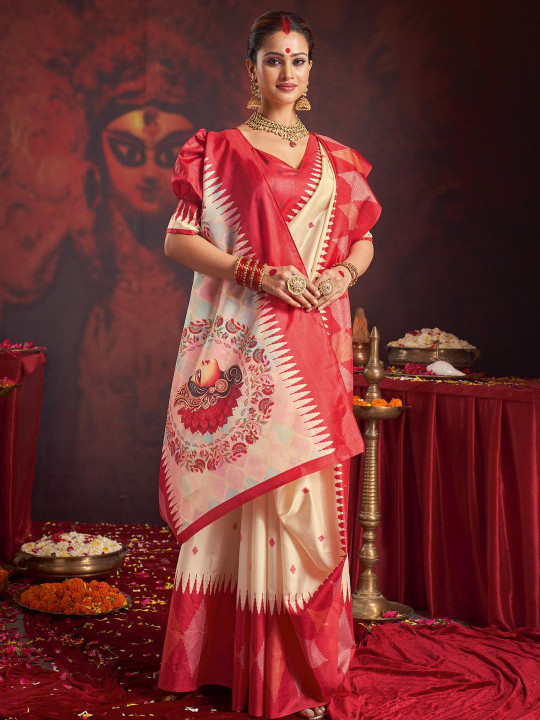
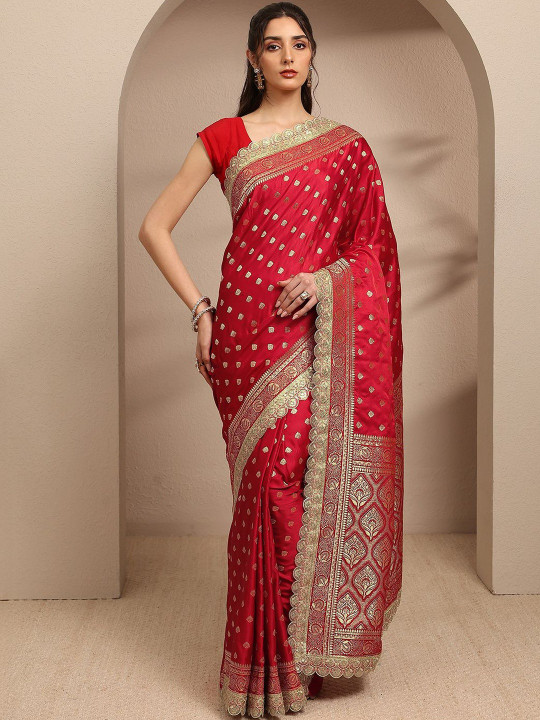
Ashtami is, without question, the most sacred and most elaborately observed day of Durga Puja — the day of Pushpanjali (flower offering), Kumari Puja, and the incredibly powerful Sandhi Puja that falls at the precise junction between Ashtami and Navami. For the vast majority of Bengali women, Ashtami is when they wear their most beautiful and culturally significant saree of the entire festival. The tradition is clear: the white-and-red Garad (or Garadh) saree is the iconic, almost universally observed Ashtami look for married women in the traditional Bengali community — and it is one of the most visually stunning and culturally meaningful saree traditions in all of India.

🌸 The Iconic Pick: Garad Saree

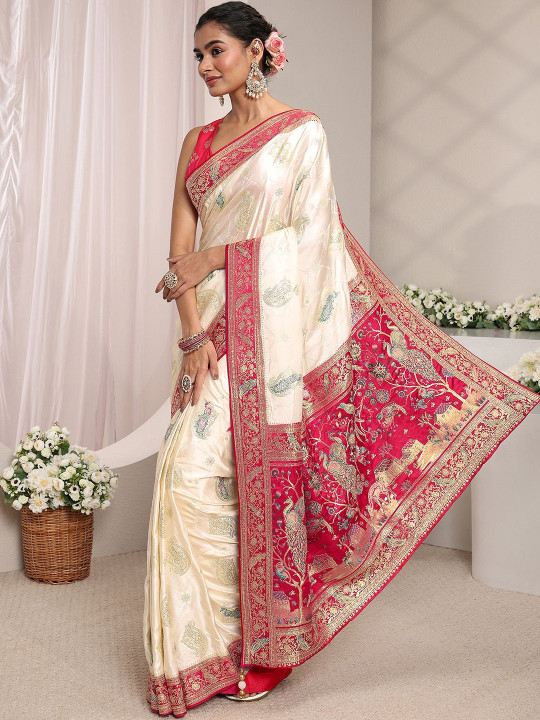
A Garad silk saree — cream or off-white with a bold red border — worn with a red blouse and generous sindoor is the most celebrated Ashtami look. Its combination of purity and the auspicious red creates a visual statement that is both deeply traditional and absolutely beautiful.

🌟 Evening Option: Rich Silk Saree

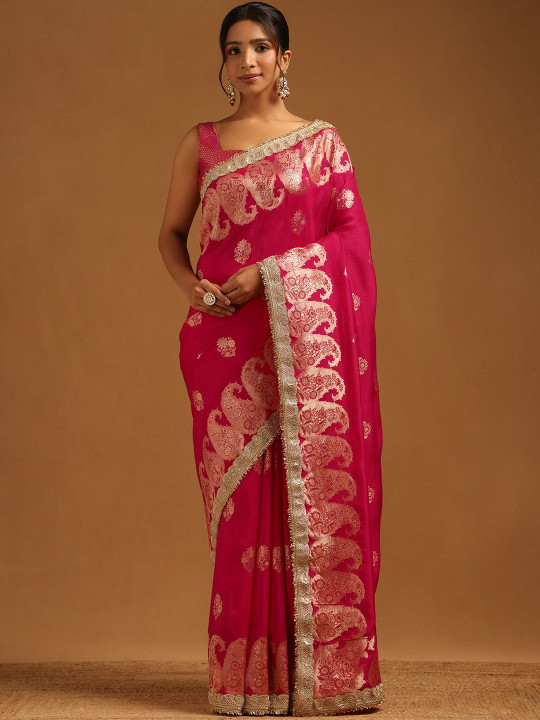
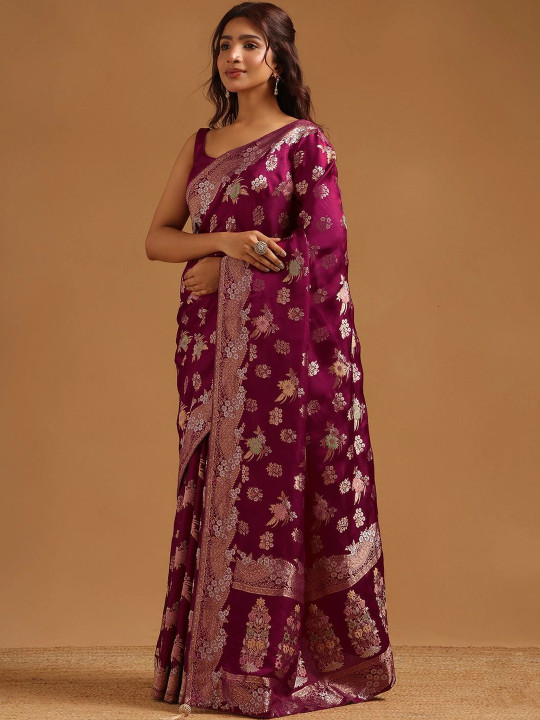
For the Sandhi Puja evening, which is one of the most electrically charged spiritual moments of the year, a deeply coloured Banarasi or Murshidabad silk in ruby red, deep maroon, or emerald green rises to the occasion magnificently.

✨ The Garad Saree explained: Garad is a specific Bishnupur silk weave — a textured cream or off-white fabric with a red border, traditionally worn without a blouse in the strictest observance, or with a matching red blouse in the more contemporary practice. The combination of white (purity) and red (shakti/power) directly mirrors the colours of Durga worship itself. Authentic Garad sarees from Bishnupur are GI-tagged and carry a specific texture and finish that sets them apart from imitations — always buy from verified weavers or cooperatives.
Day 4 · Navami

The Festive Climax — Bold, Beautiful & Celebratory 👑

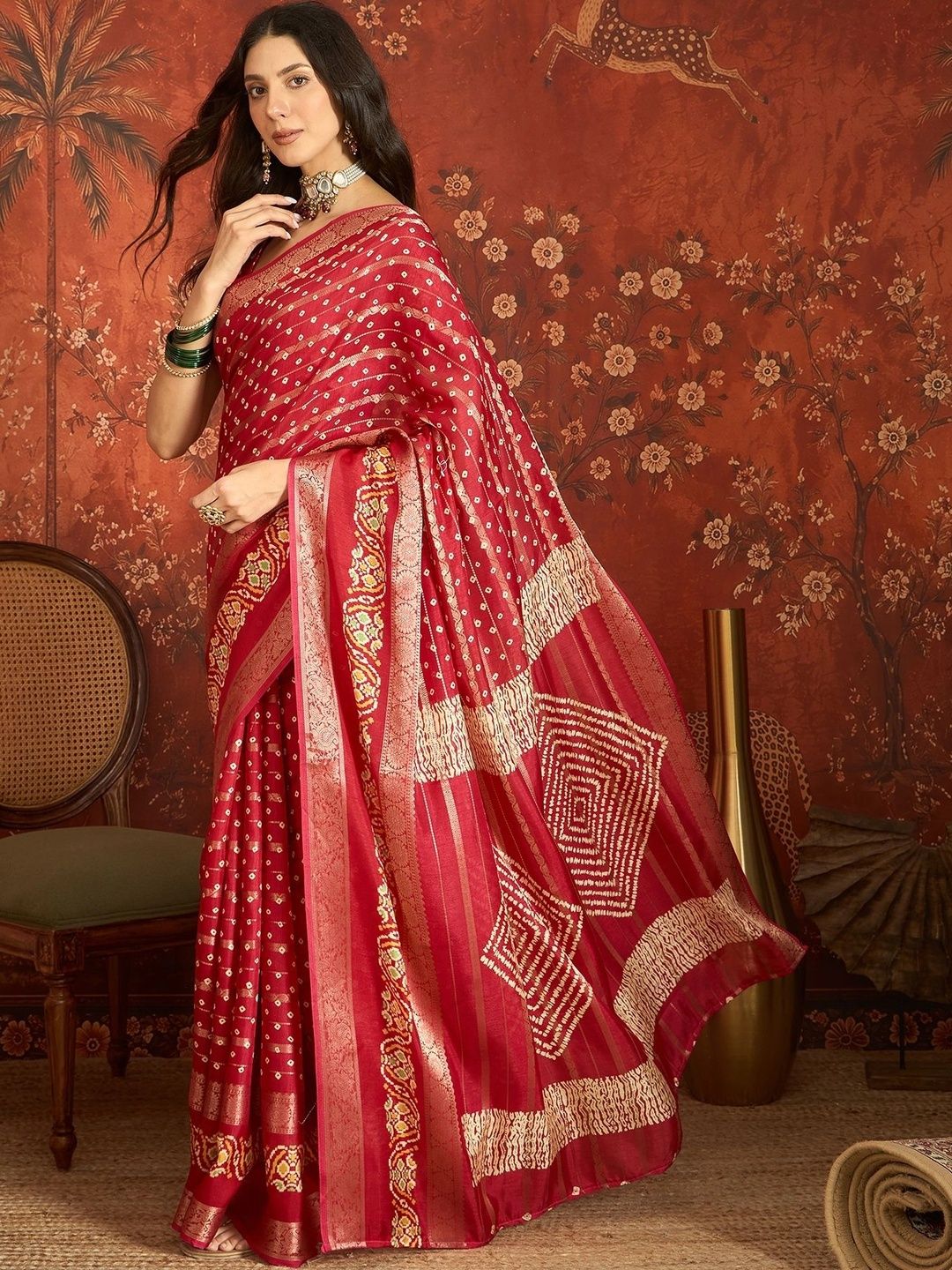
Navami is the final full day of the Goddess’s visit — the last complete day before Dashami’s farewell — and the emotional undercurrent is a bittersweet combination of celebration and impending farewell. The pandals are at their most crowded, the dhak is at its most insistent, and the evening atmosphere has an urgency and energy that is unique to this day. Navami saree dressing reflects this duality — women typically choose their most statement-making, boldly coloured saree of the festival, as if wanting the Goddess to see them at their most vibrant before she departs.

💃 Best Pick: Dhakai Jamdani or Baluchari

Navami is the perfect day for your most elaborate heritage saree — an authentic Dhakai Jamdani with its intricate woven motifs, or a narrative Baluchari with its mythological pallu scenes, is the ideal cultural and aesthetic choice for this significant day.

🌟 Alternative: Bold Colour Silk

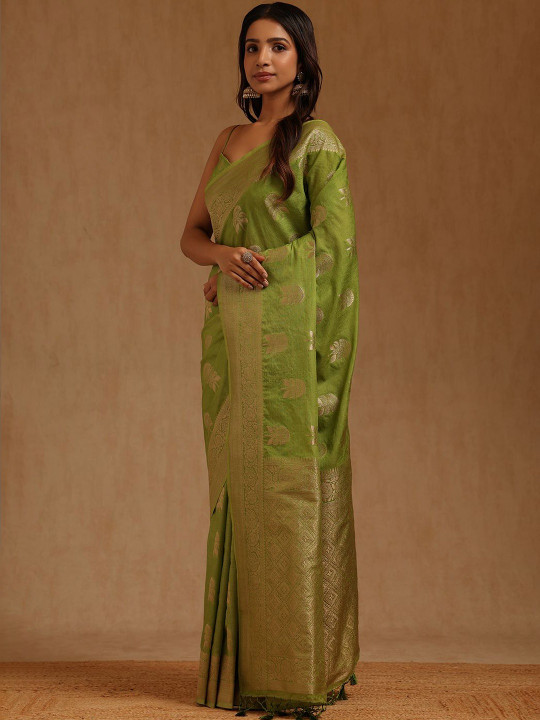
A deeply coloured Kanjeevaram, Bishnupuri silk, or Murshidabad silk in a jewel tone — royal blue, deep magenta, or forest green — makes a powerful and appropriate Navami statement.

Day 5 · Dashami — Vijaya Dashami

Sindoor Khela & Bisarjan — The Emotional Farewell 💕

Vijaya Dashami is the day the Goddess returns to Mount Kailash — and for the Bengali community, it is simultaneously the most joyful and the most heartbreaking day of the year. The morning brings the iconic Sindoor Khela, where married women apply sindoor to each other and to the Goddess’s idol in a ritual that is at once deeply devotional and gloriously, chaotically festive. The afternoon brings Bisarjan — the immersion of the idol — followed by Vijaya, the formal farewell visits and Shubho Bijoya greetings exchanged between families. The Dashami saree must honour all of these moments.

🌸 For Sindoor Khela: Red or White Saree

Red is the dominant colour of Sindoor Khela — a bold, plain red silk or cotton saree that will be joyfully marked with sindoor is the classic choice. White is also traditional and particularly beautiful once dotted with sindoor during the ceremony.

🏆 For Bisarjan & Evening: Soft Pastel

After the morning’s sindoor-filled celebration, many women change into a softer, more melancholic colour for the afternoon Bisarjan — pale yellow, cream, or a soft blue that reflects the gentle sadness of the Goddess’s departure.

💕 Sindoor Khela practical tip: The red saree you wear for Sindoor Khela will be covered in sindoor and abir (coloured powder) by the end of the morning — this is the joy and the point of the ritual. Choose a saree you love but do not mind being permanently marked. Many women have a dedicated “Sindoor Khela saree” that they save for this tradition year after year, becoming more richly marked with each passing Puja.

🌻 Bengal’s Heritage Saree Weaves: What to Know and Buy

Durga Puja is the moment when Bengal’s extraordinary handloom tradition is most visibly celebrated — and knowing the weaves helps you buy with both cultural awareness and genuine appreciation. Here are the six most important Bengali saree weaves for Durga Puja 2026.

GI Tagged🧇

Tant Saree

Bengal’s everyday handloom and Durga Puja’s most beloved casual saree — woven in districts like Shantipur and Fulia, Tant is a lightweight cotton with a characteristic rough-smooth texture, simple geometric borders, and a breathable quality that makes it ideal for the warm October evenings of pandal hopping. A good Tant becomes softer and more beautiful with every wash, and many women own Tants that are decades old. Price range: ₹400–₹5,000.

Best for: Pandal hopping, casual puja visits, everyday Puja wear

GI Tagged🎖

Dhakai Jamdani

The crown jewel of Bengali weaving — and indeed of Indian handloom — the Dhakai Jamdani uses an extraordinarily complex supplementary-weft technique to weave floral and geometric motifs (usually in white or silver thread) directly into the fabric ground, creating a sheer, luminous cloth with patterns that seem to float on air. An authentic Dhakai can take weeks to weave. It is the Navami and Dashami saree of choice for women who want to express the deepest cultural pride in their festival dressing. Price: ₹8,000–₹80,000+.

Best for: Navami, Dashami, formal occasions, cultural events

GI Tagged🎬

Baluchari Silk

One of India’s most unique narrative weaves, the Baluchari from Bishnupur (West Bengal) features its iconic pallu woven with pictorial scenes from Hindu epics — the Mahabharata, Ramayana, or stories of Durga herself — rendered entirely in silk thread. Every pallu is a miniature painting in fabric. The body is typically a rich silk in a jewel tone, with the pallu carrying all the storytelling. A Baluchari at Durga Puja is not just a saree — it is a cultural statement of the highest order. Price: ₹5,000–₹40,000.

Best for: Ashtami evening, Navami, cultural events, connoisseurs

Heritage Weave🎨

Kantha Stitch Saree

Kantha is Bengal’s most beloved embroidery tradition — simple, dense running stitches that cover a cotton or silk base in bright, earthy colours, creating folk art patterns of flowers, animals, birds, and geometric motifs. Originally stitched by women from recycled fabric, modern Kantha sarees are worked on cotton or mulberry silk bases by master artisans. The result is a saree that is simultaneously humble and sophisticated — deeply Bengali in its character and infinitely beautiful. Price: ₹2,000–₹25,000.

Best for: Saptami evening, Shashthi, pandal hopping, gifting

Heritage Weave⭐

Garad / Bishnupuri Silk

Garad is the silk specifically associated with Ashtami puja — a naturally off-white or cream Bishnupuri silk with a signature red border, woven in the Bishnupur region of West Bengal. The combination of cream and red is directly symbolic of purity and the divine power of Durga, and the Garad saree worn by a married Bengali woman at the Ashtami Pushpanjali is one of the most iconic visual images of the entire festival. Authentic Garad is woven on handlooms using mulberry silk. Price: ₹3,000–₹20,000.

Best for: Ashtami morning puja, Pushpanjali, Kumari Puja

Heritage Weave🌈

Murshidabad Silk

Woven in the Murshidabad district of West Bengal, Murshidabad silk is known for its exceptional softness and sheen — often compared to Banarasi in its drape and lustre, but with a distinctly Bengali character in its motifs and weaving style. It comes in rich, deep tones that look magnificent under the warm, golden pandal lighting of Durga Puja evenings. Murshidabad silk sarees are an excellent choice for those who want a heritage Bengal silk without the price tag of an authentic Dhakai Jamdani. Price: ₹2,500–₹15,000.

Best for: Evening puja, Navami, formal family events

🌸 Durga Puja Saree Colour Guide 2026

While Durga Puja saree dressing is ultimately personal, certain colour traditions are so deeply embedded that understanding them adds another layer of cultural meaning to your choices. Here is the colour story of Durga Puja across the five days, along with the 2026 palette that is currently trending.

Day Traditional Colour Best Saree Choice Jewellery
Shashthi Yellow / Marigold Tant or cotton-silk in warm tones Gold jhumkas, glass bangles
Saptami White / Cream Tant in cream with coloured border Simple gold, pearl earrings
Ashtami Red & White Garad silk (white + red border) Temple gold, red bangles
Navami Bold / Jewel Tones Dhakai Jamdani or Baluchari Polki, kundan or statement pieces
Dashami Red (morning) Red or white silk for Sindoor Khela Sindoor, gold, conch bangles

💃 Contemporary Durga Puja Saree Looks for 2026

While traditional Bengali saree culture is deeply cherished, it would be incomplete not to acknowledge the vibrant contemporary saree scene that has emerged around Durga Puja in recent years. Younger women across Bengal and the Bengali diaspora are finding exciting new ways to express their cultural identity through sarees that blend heritage craft with modern silhouette and styling. Here are the contemporary looks that are trending for Puja 2026.

🎨

The Contemporary Kantha on Silk

Kantha embroidery on silk — rather than the traditional cotton base — has become a massive Durga Puja trend in recent years. The lustrous silk base adds a luxurious quality to the folk art embroidery, making it appropriate for more formal Puja events while retaining the deeply Bengali character of the craft. In 2026, Kantha-on-silk sarees in jewel-toned bases — teal, deep blue, and rich magenta — with floral and figurative motifs are among the most coveted Puja sarees in the market. Moreover, they photograph magnificently under pandal lighting, which makes them a natural choice for social media moments that have become as central to Puja celebration as the puja itself.

🌸

The Linen Tant — Modern Cool

The linen-tant hybrid — a linen or cotton-linen blend woven with the visual character of a traditional tant — has become very popular among urban Bengali women for the pandal-hopping nights of Puja. It offers the casual, relaxed silhouette of a tant with a slightly crisper drape and a texture that feels very contemporary. Furthermore, linen’s natural breathability makes it an excellent choice for the warm and often crowded evenings at popular pandals. In solid earthy colours or with a simple contrast border, the linen tant is the effortlessly cool Puja saree for the 2026 woman.

💖

The Jamdani-Inspired Digital Print

Jamdani-inspired digital print sarees — where the complex floated-weft patterns of the original weave are replicated through high-quality digital printing on georgette or silk — have opened up the Jamdani aesthetic to a much wider market. While purists rightly insist on the handwoven original, these accessible prints allow women who cannot afford an authentic Dhakai to participate in the visual tradition of the festival with a saree that photographs beautifully. In 2026, the most sophisticated versions use subtle tones-on-tone printing that creates a genuinely refined effect.

✨

The Organza Saree for Pandal Nights

Organza sarees — sheer, structured, and spectacular under lighting — have found a devoted audience at Durga Puja pandal events in recent years, particularly among the Delhi and Mumbai Bengali diaspora. A pastel or jewel-toned organza saree with hand-painted or embroidered border, worn with a dramatic blouse and statement earrings, is one of the most photographed Puja looks of 2026. It is simultaneously contemporary and festive, and the way organza moves under the elaborate pandal lighting creates an effect that is genuinely beautiful.

💗 Durga Puja 2026 Blouse Trends: The Statement Piece

In 2026, the blouse continues its evolution as the most talked-about element of any saree look — and Durga Puja is no exception. Here are the blouse trends that are transforming Puja saree looks this season.

💖

Deep Back & Tie-Back Blouses

Heavily embroidered or hand-painted back panels are the most-photographed blouse element of Puja 2026 — elegant from the front and spectacular from behind.

🌸

Hand-Painted Bengali Motifs

Blouses hand-painted with traditional Bengali Patachitra motifs — Durga, lotus, conch shell — are having a big cultural moment as wearable folk art during the festival.

💝

Off-Shoulder & One-Shoulder

Contemporary off-shoulder blouses paired with traditional tant or Kantha sarees create the most striking fusion of old and new for younger women at evening pandal events.

🌟

Mirror Work Blouses

A simple tant or cotton saree elevated dramatically by a heavily mirror-worked blouse — the contrast of the understated saree and the glittering blouse is a 2026 Puja styling move that photographs brilliantly.

👑

Contrast Colour Blouses

A deep teal blouse with a red tant, a mustard blouse with a white jamdani, or a plum blouse with a cream Garad — deliberate, high-contrast colour pairings are the most effective and easiest way to make a saree look contemporary.

🎖

Crop Blouse & Statement Belt

A fitted crop blouse paired with a belted waist — worn over a draped tant or cotton saree — is the contemporary Puja look for younger women who want to nod to the Bengali saree tradition while expressing a distinctly modern sensibility.

🌎 Pandal Hopping Saree Styling Tips 2026

Pandal hopping — the beloved and uniquely Bengali practice of visiting multiple beautifully decorated Durga Puja pandals in the same evening — requires its own specific approach to saree dressing. Here are the styling tips that will keep you looking beautiful through a long, energetic Puja evening.

📷Dress for the lighting, not the daylight. Pandal lighting is warm, directional, and often quite dramatic — it is designed to make everything look like a photograph. Rich colours (deep teal, ruby, gold, marigold) glow magnificently under this lighting. Pale pastels can bleach out. If you want stunning pandal photographs, lean toward jewel tones and warm shades.

🍄Choose a saree you can walk in confidently. A pandal-hopping evening can involve several kilometres of walking, standing in crowds, and navigating uneven ground. A tant or Kantha cotton saree draped in the standard Nivi style is far more practical than a heavily embellished silk with a trailing pallu. Pin the pallu securely at the shoulder and keep the pleats neat but not excessively tight.

👌Minimal jewellery for crowded evenings. The large pandals attract enormous crowds — heavy jewellery chains and dangling earrings can catch on people or get tangled in crowds. For busy pandal evenings, simple jhumkas, thin bangles, and a clean bindi are safer and actually look better in photographs than heavy statement pieces.

🗠️Comfortable footwear is non-negotiable. Kolkata’s pandal circuit and the equivalent in every other city involves walking distances that will destroy your feet in heels by the second stop. Embellished flat sandals or block heels under two inches are the most sensible and still beautiful choice for pandal hopping.

🌸A flower in the hair is a Puja essential. A gajra of jasmine or a few fresh shiuli (night jasmine) flowers pinned near the bun or braid is the single most beautiful and culturally specific Durga Puja hair accessory — fragrant, traditional, and deeply Bengali. It also photographs magnificently in outdoor light.

💓The sindoor is the most important adornment. For married women, generous sindoor in the parting is not just a tradition — it is the most visible and culturally meaningful element of the entire Puja look. No amount of expensive jewellery or elaborate saree can substitute for this one, essential element of the married Bengali woman’s Puja appearance.

🌸 Shop the GlamorEver Durga Puja Saree Edit!

We have curated the best Tant, Dhakai Jamdani, Garad, Baluchari, Kantha, and contemporary sarees for Durga Puja 2026 — across Myntra, Amazon India, Craftsvilla, and verified Bengal cooperative websites. Check our complete Durga Puja Saree Edit for every budget and every day of the festival!

❓ Frequently Asked Questions (FAQs)

Q1. What is the traditional saree for Durga Puja Ashtami?

The Garad silk saree — cream or off-white with a red border — is the most traditional and widely observed Ashtami saree for married Bengali women. It is worn for the Pushpanjali (flower offering) puja in the morning, paired with a red blouse (in contemporary practice) and generous sindoor. It is one of the most culturally significant saree-dressing traditions in all of India.

Q2. What is a Tant saree and why is it associated with Durga Puja?

Tant is a traditional handloom cotton saree woven in the districts of Shantipur, Fulia, and Dhaniakhali in West Bengal. It is known for its lightweight texture, breathability, and simple geometric borders. It is associated with Durga Puja because it is the quintessential Bengali everyday saree — comfortable enough for long evenings of pandal hopping, beautiful enough for a cultural celebration, and deeply rooted in Bengali identity.

Q3. Where can I buy authentic Dhakai Jamdani sarees in India?

Authentic Dhakai Jamdani (GI tagged) can be purchased from government emporiums (Biswa Bangla stores, Delhi Haat), the Weavers’ Service Centres, the Bengal stalls at Dilli Haat, certified cooperative websites like GoCoop, and from verified individual weavers and sellers on platforms like Etsy India. Always look for the GI tag and weaver certification when buying premium Jamdani.

Q4. What should I wear for Sindoor Khela on Dashami?

The traditional Sindoor Khela saree is a plain red or white silk or cotton saree that will be marked with sindoor and abir during the ritual. Choose a saree you love but do not mind being permanently stained — many women have a dedicated Sindoor Khela saree that they wear year after year, each iteration becoming more beautifully marked with the festival’s memories.

Q5. Can non-Bengali women participate in Durga Puja saree traditions?

Absolutely and wholeheartedly — Durga Puja has grown into a festival that welcomes and celebrates participation from all communities. Wearing a Tant, a Kantha saree, or even a simple cotton saree in red and white to attend a Durga Puja celebration is a beautiful act of cultural appreciation. The Bengali community is, in general, delighted when women from other communities engage with the festival’s traditions with genuine respect and curiosity.

Q6. What is the price range for Durga Puja sarees in 2026?

Durga Puja sarees span an enormous range: a basic Tant starts at ₹400–₹800 from local markets; good-quality Tant and Kantha pieces range from ₹2,000–₹8,000; authentic Garad silk starts at ₹3,000; Baluchari sarees from ₹5,000–₹40,000; and authentic Dhakai Jamdani from ₹8,000 to ₹80,000+. There is a genuinely beautiful saree at every price point for Durga Puja.

🌸 🧇 ✨

Durga Puja saree dressing is one of those beautiful traditions where the more you learn, the more you appreciate — where a simple choice of fabric or colour reveals itself to carry centuries of cultural meaning, the work of master weavers, and the love of a community that dresses for its Goddess with the same seriousness and joy every year. Whether you are wearing your first Tant or your grandmother’s Dhakai Jamdani, your Puja saree is a way of saying: I am here, I am celebrating, I am part of this.

May this Durga Puja bring you beautiful sarees, beautiful pandals, the sound of the dhak drum, the fragrance of shiuli, and every blessing the Goddess has in her ten hands. 🌸

Shubho Pujo — from all of us at GlamorEver. 🌸✨📍

Leave a Reply

Your email address will not be published. Required fields are marked *

×